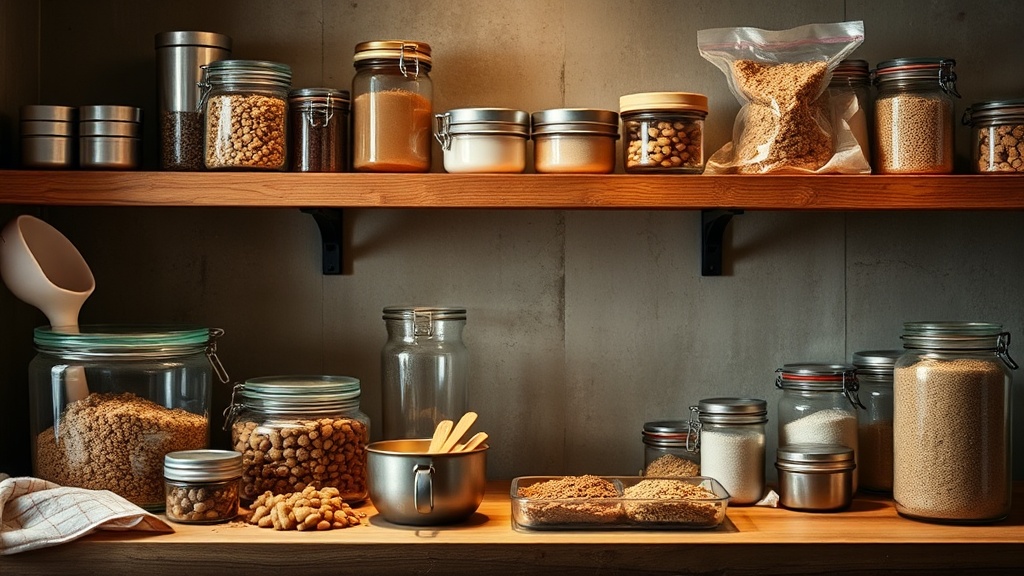
Building a Reliable Gluten-Free Pantry from Scratch

You'll learn how to select high-quality, gluten-free staples that serve as the backbone of a professional-grade kitchen. We're focusing on the foundational items—flours, grains, and oils—that make a difference between a meal that tastes "okay" and one that satisfies a refined palate. A well-stocked pantry isn't about having every new fad product on the shelf; it's about having the right building blocks to create consistent, high-quality dishes at home.
The biggest mistake I see in home kitchens isn't a lack of skill—it's a lack of proper inventory. When you're cooking gluten-free, you can't rely on the same quick fixes as a standard kitchen. You need to understand the structural properties of your ingredients. If your pantry is filled with low-quality starches and cheap oils, your cooking will reflect that. We are looking for depth, texture, and reliability.
What are the best gluten-free flour blends to keep on hand?
Not all blends are created equal. In a professional kitchen, we don't just grab any bag labeled "gluten-free." We look at the ratio of starches to proteins. For general baking, a high-quality blend containing a mix of rice flour, potato starch, and tapioca starch provides a better structure than many cheap, single-source brands. If you want to bake bread that actually has a crumb, you need to look for blends that include xanthan gum or guar gum to mimic the elasticity lost when wheat is removed.
For those who prefer to mix their own, I suggest keeping a rotation of these three staples:
- Fine Rice Flour: This acts as your base. Ensure it is ultra-fine to avoid a gritty mouthfeel—a common complaint in subpar GF baking.
- Tapioca Starch: This adds much-needed chew and elasticity to cookies and breads.
- Sorghum Flour: If you want a flavor profile that mimics wheat more closely, sorghum is a fantastic, earthy option that works beautifully in savory and sweet applications.
Always check the Celiac Disease Foundation for updates on cross-contamination risks when buying bulk grains. You want to ensure your flour sources are certified gluten-free to avoid any unexpected reactions.
How do I choose the right grains for savory dishes?
Grains are the heart of many meals, and the gluten-free world offers incredible variety if you know what to look for. Instead of just sticking to white rice, consider the textural advantages of ancient grains. Quinoa, amaranth, and buckwheat (which is actually a pseudocereal, not wheat!) offer much higher protein content and a more interesting texture to your bowls and pilafs.
When selecting grains, look for the following attributes:
- Texture: Does the grain hold its shape when cooked? A good quinoa should be fluffy, not mushy.
- Flavor: Does it have a nutty or neutral profile? Buckwheat has a bold, robust flavor that can dominate a dish, so use it intentionally.
- Purity: Look for brands that guarantee dedicated gluten-free facilities. Even if a grain is naturally GF, the processing line might not be.
For more technical details on grain properties, the Food Standards Agency provides excellent resources on food safety and ingredient quality. A grain that is well-stored and high-quality will behave predictably every time you cook it.
Which oils and fats offer the most flavor and stability?
Cooking fat isn't just about heat transfer; it's about flavor delivery. In my years in professional kitchens, I learned that the fat you choose defines the soul of the dish. In a gluten-free kitchen, where we often rely on more starches, the quality of your fat becomes even more noticeable.
Avoid heavily processed vegetable oils that leave a greasy film on the palate. Instead, focus on these:
- Extra Virgin Olive Oil: Best for low-to-medium heat and finishing dishes. It brings a fruitiness that offsets the heaviness of some GF starches.
- Avocado Oil: This is my go-to for high-heat searing. It has a high smoke point and a neutral flavor, meaning it won't fight with your ingredients.
- Grass-fed Ghee: For a rich, buttery depth in sauces or for sautéing, ghee is much more stable than standard butter and adds a distinct, nutty aroma.
A common mistake is using a low-smoke-point oil for high-heat cooking. This results in a bitter, burnt taste that ruins even the best-prepared protein. Always match your fat to your cooking method.
The goal is to build a pantry that allows for creativity without constant trips to the store. When you have high-quality flours, diverse grains, and stable fats, you aren't just "getting by" with a gluten-free diet. You're actually cooking with intention. Each ingredient should serve a purpose, whether it's adding structure, color, or a specific flavor profile. Don't settle for the mediocre versions of these staples; your palate deserves better. A pantry built on quality is the first step toward professional-level results in a gluten-free home.