Gluten-Free Pasta Brands Suck. Here's Why—And What Actually Works.

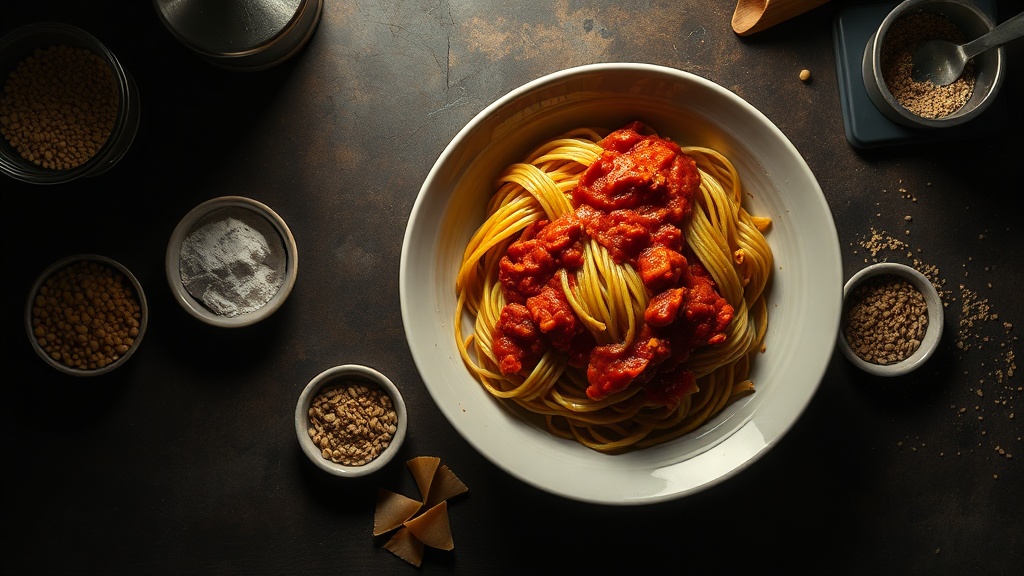
Most gluten-free pasta is engineered for the warehouse, not your bowl.
I spent six years in professional kitchens before my Celiac diagnosis, and I have now spent ten years reverse-engineering what pasta should be. I've tested more boxes of GF pasta than I care to admit, and I'm going to save you the $80 and the mediocre Tuesday night.
The short version: most brands are lying to you, a few are doing their best, and one chemistry tweak changes everything. Let's look under the hood.
Why Gluten-Free Pasta Fails (It's Not Your Fault)
Gluten-free pasta fails because of physics, not effort.
In wheat pasta, gluten proteins cross-link into a three-dimensional lattice when hydrated. That network is what gives you chew, what holds the starch granules together under heat, and what lets the pasta absorb sauce without structurally collapsing. Gluten is, functionally, the rebar in the concrete.
GF pasta has no rebar.
What it has instead is starch—chickpea starch, rice starch, corn starch—and starch has a deeply annoying habit called retrogradation: as cooked starch cools, the amylose chains re-crystallize. You know how leftover GF pasta turns into a solid mass of sadness by morning? That's retrogradation. And it begins the second the pasta hits your bowl.
Brands respond to this problem in two ways:
- Gums and binders (xanthan, guar, locust bean)—which work structurally but contribute a soapy, slick mouthfeel that coats your palate and doesn't let go.
- Underengineer the product and blame the cook. (See: every box that says "do not overcook" when what they mean is "the window is 47 seconds and we didn't test this.")
There's a third option—psyllium husk—that almost nobody is using correctly. I'll get to that.
Category Breakdown: Three Pasta Types, Three Failure Modes
Chickpea-Based (Banza, Barilla Chickpea, Lensi)
Chickpea pasta gets the most buzz and has the most marketing money behind it. Here's what's true: chickpea flour has higher protein and fiber than rice or corn flour, which does help with structural integrity. Here's what brands don't tell you: chickpea starch is grittier than rice, and the flour-to-water ratio demands precision.
Banza is the market leader and I understand why. It holds its shape better than anything in the corn-rice or brown rice category at standard cook times. But the texture skews grainy—you're tasting the chickpea, not pasta—and it needs to be undercooked by 2 full minutes from the box recommendation. Pull it at al dente-plus-nothing and shock it in cold water immediately. Miss that window by 90 seconds and you have chickpea hummus in noodle form.
Barilla Chickpea is Banza's more accessible competitor. What I consistently taste in the finished product is a slick, coating finish that fights oil-based sauces—my best read, from ingredient-list comparison and texture analysis, is that the binder load is higher relative to Banza's. With marinara you can't tell. With aglio e olio you're eating glue.
Lensi (the Italian brand, lentil-chickpea blend) is genuinely interesting. The lentil addition changes the starch profile enough that you get a more complex flavor and better bite resistance. It's also the most expensive of the group per ounce, and I've watched it go in and out of stock at specialty stores. Worth buying when you can find it. Not a daily driver for most budgets.
Verdict on chickpea: Best structural integrity of the three categories, but you must undercook and shock. No forgiveness for distraction. Graininess is real.
Corn-Rice Blend (Barilla Gluten Free)
Barilla GF—the original line, not the chickpea version—uses a corn and rice flour blend. It's the most accessible brand in this space: mainstream grocery stores, familiar name, reasonable shelf price. That accessibility is doing a lot of heavy lifting, because the pasta itself is not doing much.
The corn-dominant starch profile creates the shortest retrogradation window I've tested. The pasta holds together fine in boiling water, but the moment it drains, the clock starts. By the time you've finished tossing it with sauce, you've lost a significant amount of texture. By the time you plate and get to the table, you're eating soft noodles. Not terrible. Not pasta.
The other problem is hydration inconsistency. Corn starch absorbs water less predictably than rice starch, and in a blend, that variability compounds. The same cooking time in the same pot can yield different results depending on altitude, water hardness, and how aggressively you're maintaining the boil. (I live in Chicago. My boil is fine. My results were still inconsistent across three batches.)
Barilla GF works if you're new to GF cooking and need training wheels. It won't humiliate you. It won't impress anyone either.
Verdict on corn-rice blend: Acceptable in a pinch. Too much variance for a cook who cares. The retrogradation timeline is unforgiving.
Brown Rice-Based (Tinkyada)
Tinkyada is the quiet workhorse that the GF community has been recommending for fifteen years, and those people are right for reasons they might not be able to articulate.
Brown rice has a more complex starch profile than white rice—higher amylose relative to amylopectin, which means slower gelatinization and slower retrogradation. In practical terms: more working time. More forgiveness when you answer the phone.
Tinkyada also uses a rice bran addition that changes the surface texture in a way that actually helps sauce adhesion. This is not a coincidence. It's product engineering.
The downsides are real: Tinkyada takes 2–3 minutes longer than the box says (every batch I've tested, every pasta shape), the flavor is more neutral than chickpea (which you may want, or may not), and it softens unevenly if you're cooking a large batch without obsessive stirring.
But of all the brands I've tested, Tinkyada is the only one where I've finished a bowl and not thought about the pasta. I've just thought about the food. That's the ceiling for GF pasta right now, and Tinkyada hits it.
Verdict on brown rice: The best single-brand option. Add 2–3 minutes to cook time. Stir constantly. Worth it.
The Ingredient That Actually Matters: Psyllium Husk
Here's what took me two years to figure out and I'm giving it to you for free.
The reason xanthan gum fails as a GF pasta binder isn't that it doesn't work—it's that many brands use it at concentrations tuned for shelf stability, not mouthfeel. You end up with a structural solution that reads as coating rather than texture.
Psyllium husk works differently. It's a soluble fiber that forms a gel structure when hydrated, and in pasta application, it mimics the protein-lattice behavior of gluten more closely than any gum. From the ingredient lists I've analyzed and the commercial GF pastas I've pulled apart in my kitchen, the brands that do use psyllium tend to use it at what I'd call a stabilization dose—enough to affect structure, not enough to create genuine chew. That's my inference from tasting and comparing, not a formulation audit.
What I've found in my own testing: at 1.0–1.5% psyllium by flour weight, you get actual chew. Not gummy chew. Not chewy-in-a-bad-way chew. The kind of resistance-and-release that makes pasta feel like food.
Among the major commercial brands I've tested, I haven't found one doing this at that concentration. (Tinkyada doesn't use psyllium at all and compensates with rice bran; their results are still the best in class, which tells you something about how important ingredient quality is upstream of binders.) The psyllium advantage, as I've experienced it, is currently in the homemade and small-batch space—and in the hybrid method below.
The DIY Hybrid: 60/40 for Texture Recovery
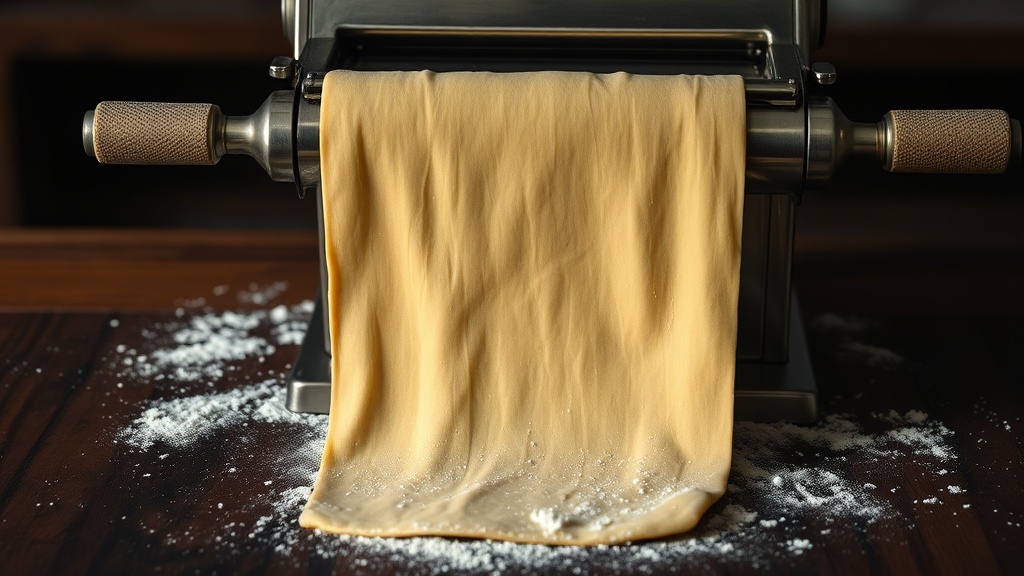
If you have a pasta extruder or a pasta roller, this is the formula I've landed on after two years of kitchen testing. If you don't, this section still explains why blending matters—and you can apply this logic to mixing cooked pasta types in the same dish.
Base flour blend:
- 60% fine brown rice flour (superfine, not coarse—this matters)
- 40% chickpea flour
- 1.2% psyllium husk powder by total flour weight
- 0.5% fine sea salt
- Water to hydrate (start at 50% hydration by weight, adjust from there)
Why this works:
The brown rice provides the slower retrogradation timeline. The chickpea provides protein structure and a more complex bite. Psyllium at 1.2% creates the lattice without gum slick. At 50% hydration, the dough is stiff enough to extrude cleanly but not so dry that it cracks during rolling.
Cook time with this blend: 4–5 minutes in heavily salted, vigorously boiling water. Pull 30 seconds before it looks done. It will finish in the sauce.
On blending cooked pasta from store packages: Yes, you can also just cook Tinkyada and Banza together in the same pot (they have compatible cook times if you start Tinkyada 2 minutes earlier). The texture profile is different from the homemade blend, but you get more structural integrity than either alone. It's a hack, not a solution. But it works on a weeknight.
The Testing Table
Prices vary too much by retailer, region, and sale cycle to be useful here—check your own store. What matters is the relative tier.
| Brand | Base Flour | Texture at Al Dente | Sauce Hold | Retrogradation Speed | Cost Tier | Verdict |
|---|---|---|---|---|---|---|
| Tinkyada | Brown rice | Very good | Good (rough surface) | Slow | Mid | Best in class |
| Banza | Chickpea | Good (if undercooked) | Good | Medium | Mid–High | Best chickpea; timing-critical |
| Lensi | Lentil-chickpea | Very good | Very good | Medium | High | Worth it when available |
| Barilla Chickpea | Chickpea | Medium | Poor (coating finish) | Medium | Budget–Mid | Skip |
| Barilla GF | Corn-rice blend | Poor | Poor | Fast | Budget | Training wheels only |
The Bottom Line
The GF pasta market in 2026 is better than it was in 2016 and worse than the marketing suggests. Brands are making shelf-stable products and calling it innovation. The regulatory floor for "gluten-free" labeling (<20 ppm per FDA standards) tells you nothing about texture, nothing about starch behavior, nothing about whether you'll be happy eating this.
What actually matters: starch category, retrogradation rate, and binder choice. Tinkyada is the best commercial option. Banza works if you're disciplined. Everything else is a compromise you'll make when you're traveling or someone else is doing the grocery run.
And if you have 20 minutes and a pasta roller, the 60/40 rice-chickpea blend with psyllium at 1.2% will ruin you for store-bought. I'm telling you this as both a warning and an invitation.
The board doesn't lie—and neither does starch chemistry. Happy cooking, but watch the starch ratio.
— Elena