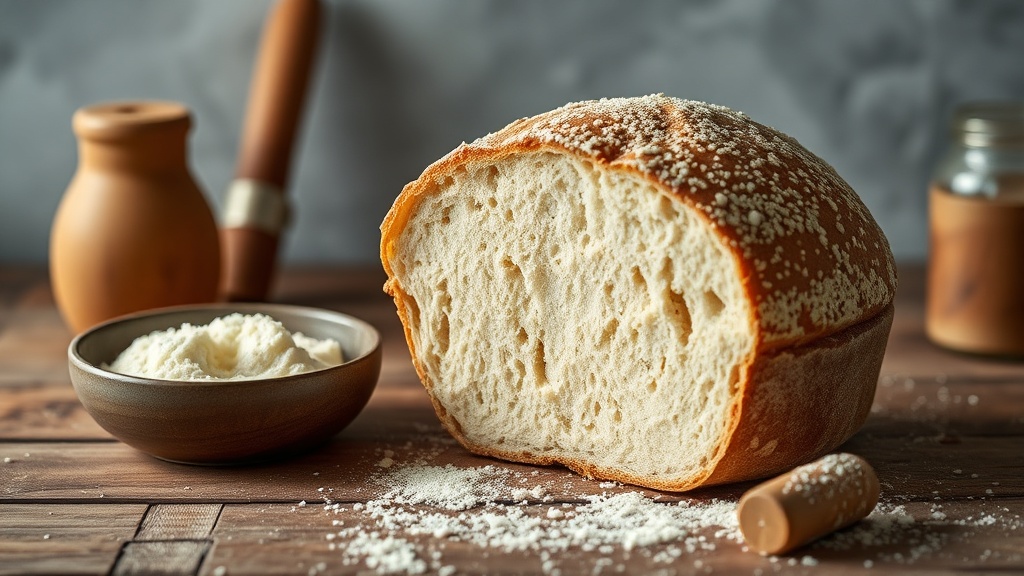
How to Make a Gluten-Free Sourdough Starter from Scratch

Why Gluten-Free Sourdough Requires a Different Approach
Building a gluten-free sourdough starter demands precision that wheat-based methods simply cannot provide. Without gluten to trap gases and create structure, the fermentation process relies entirely on bacterial balance, hydration ratios, and flour protein content. This guide covers the complete process from day one through active baking readiness, including exact measurements, specific flour brands that perform consistently, and the visual and olfactory markers that indicate success. Readers will learn why brown rice flour outperforms white rice flour, how hydration percentages affect fermentation speed, and the exact timeline from mixing the first batch to baking a viable loaf.
Equipment and Ingredients: The Non-Negotiables
Successful gluten-free sourdough starters require specific tools. Glass or ceramic containers work exclusively—plastic retains odors that contaminate the culture, and metal reacts with the acidic byproducts of fermentation. A 1-quart wide-mouth mason jar provides adequate space for expansion while allowing easy stirring. Digital kitchen scales measure to the gram; volume measurements fail here because gluten-free flours vary dramatically in density.
For flour selection, the data points to brown rice flour as the superior foundation. Bob's Red Mill Brown Rice Flour contains approximately 12% protein and 3% fat, providing the nutrients wild yeast requires. Arrowhead Mills Organic Brown Rice Flour performs similarly. Avoid white rice flour—it lacks the protein content necessary for robust fermentation. Supplement with sorghum flour ( Authentic Foods Sorghum Flour at 11% protein) after day five to introduce complexity and improve final bread structure.
Water quality matters measurably. Tap water containing chlorine or chloramine kills wild yeast. Use filtered water with a pH between 6.5 and 7.5. Poland Spring, Fiji, or any reverse-osmosis filtered water works consistently. Temperature control requires precision: maintain water between 75°F and 80°F for optimal bacterial activity.
The Seven-Day Feeding Protocol
Day 1: Initial Mix
Combine 100 grams Bob's Red Mill Brown Rice Flour with 100 grams filtered water at 78°F in a clean quart mason jar. Stir vigorously for 60 seconds to incorporate oxygen—this initial aeration jumpstarts aerobic bacteria. Cover with a coffee filter secured by a rubber band; the culture requires air exchange while preventing contamination. Place the jar in a location maintaining 72°F to 75°F ambient temperature. Mark the starting level with a rubber band or masking tape.
Day 2: First Feeding
Discard 100 grams of the mixture—this removes excess acidity that inhibits yeast growth. Add 50 grams brown rice flour and 50 grams water at 78°F. Stir for 30 seconds. The consistency should resemble thick pancake batter. Minimal visible activity occurs today; this is expected. The pH drops from approximately 6.0 to 4.5 as lactobacilli establish dominance.
Day 3: Signs of Life
By hour 48 to 60, small bubbles appear on the surface and sides of the jar. The mixture develops a tangy, yogurt-like aroma. Discard 100 grams, then feed with 50 grams flour and 50 grams water. If the ambient temperature drops below 70°F, extend the feeding interval to 18 hours instead of 12. Bubbles indicate carbon dioxide production—the first evidence of wild yeast colonization.
Day 4: Acceleration Phase
Activity increases dramatically. The starter may double in volume within 8 hours of feeding. Discard 100 grams and feed with the standard 50/50 ratio. Monitor the peak height—mark it with tape. When the starter collapses back to its original volume, the yeast has consumed available nutrients and requires feeding. This collapse typically occurs within 6 to 10 hours at 75°F.
Day 5: Introducing Sorghum
Begin transitioning to a blend for improved flavor complexity. Discard 100 grams, then feed with 40 grams brown rice flour, 10 grams sorghum flour, and 50 grams water. The sorghum introduces additional minerals and subtle sweetness. Some bakers notice increased fermentation speed with sorghum—if the starter peaks within 4 hours, increase the feeding ratio to 60 grams flour blend and 60 grams water.
Day 6: Establishing Rhythm
The starter should now predictably double in volume within 6 to 8 hours of feeding and maintain that peak for 2 to 3 hours before gradual collapse. The aroma shifts from sharp tang to a balanced sour-sweet profile with yeasty undertones. Continue the 40/10 flour blend with 50 grams water. By the end of day 6, the starter should pass the float test: a teaspoon of starter dropped into water floats when the culture contains sufficient trapped gas.
Day 7: Maturation and Testing
A mature gluten-free sourdough starter exhibits specific characteristics: it doubles in volume within 4 to 6 hours of feeding, domes slightly at the peak, and creates a network of fine bubbles visible throughout the mixture when stirred. The pH stabilizes between 3.8 and 4.2. Feed the starter, wait for peak activity, then perform the float test. If the sample floats for more than 10 seconds, the starter is ready for baking. If it sinks, continue feeding for 24 to 48 additional hours.
Understanding the Science: Hydration and Fermentation
Gluten-free sourdough starters perform optimally at 100% hydration—equal weights of flour and water. This ratio provides sufficient moisture for bacterial mobility without creating excess liquid that dilutes acid concentrations. Higher hydration (120% to 130%) accelerates fermentation but produces thinner, more sour results. Lower hydration (80% to 90%) slows fermentation and creates milder flavor profiles.
Temperature directly correlates with fermentation speed. At 65°F, a feeding cycle extends to 18 hours. At 85°F, the same cycle completes in 4 hours but risks developing off-flavors from unbalanced bacterial growth. The ideal range of 72°F to 78°F maintains healthy ratios between Saccharomyces cerevisiae yeast and Lactobacillus bacteria.
Troubleshooting Common Failures
The Starter Smells Like Acetone or Nail Polish Remover
This indicates excessive acidity and starvation. The solution requires immediate action: discard all but 20 grams of starter, then feed with 100 grams flour and 100 grams water. This 1:5:5 ratio dilutes acid concentrations and provides abundant fresh food. Repeat this large feeding for two cycles.
Pink, Orange, or Fuzzy Growth Appears
These colors indicate mold contamination. Discard the entire starter. Mold produces mycotoxins that penetrate beyond visible growth—scraping the surface does not render the culture safe. Begin again with fresh flour and sterilized equipment.
No Activity After 72 Hours
Several factors cause stalled starters. Check water quality—chlorine is the most common culprit. Verify flour freshness; brown rice flour older than 6 months may have oxidized fats that inhibit fermentation. If using refrigerated flour, allow it to reach room temperature before mixing. As a last resort, add 1 teaspoon of organic pineapple juice to day 1 mixture—the natural sugars and acidity boost initial bacterial activity without the refined sugar that promotes undesirable organisms.
Excessive Liquid Separation
A layer of gray liquid (hooch) indicates the starter needs more frequent feeding. Pour off the hooch or stir it back in—either approach works, though pouring off reduces sourness. Increase feeding frequency to every 8 hours during peak summer temperatures.
Maintenance Schedules for Different Baking Frequencies
For daily bakers, maintain the starter at room temperature with twice-daily feedings: discard all but 50 grams, then feed 50 grams flour blend and 50 grams water. This keeps the culture active and ready for immediate use.
Weekly bakers should refrigerate the starter after feeding. The cold environment slows metabolism dramatically. Remove from refrigeration 12 hours before baking, discard and feed, then allow the starter to peak before use. Refresh refrigerated starters weekly—even without baking, discard and feed to maintain viability.
Monthly bakers can maintain a "scraps" method: collect 50 grams of discard in a separate container after each baking session, refrigerate these scraps, and revive them 48 hours before the next bake with aggressive feedings.
Transitioning to Baking
A mature starter produces approximately 200 grams of usable culture per feeding. Standard gluten-free sourdough recipes require 150 to 200 grams of active starter. Always feed the starter 4 to 6 hours before mixing dough—this timing ensures the yeast population peaks when incorporated into the final dough.
Reserve 20 grams of starter as the seed for the next batch rather than using the entire culture. This preservation method eliminates the need for massive feedings and maintains genetic stability in the culture.
"The difference between a dense, gummy gluten-free loaf and one with open crumb and proper chew comes down to starter vitality. A starter that doubles reliably within 6 hours contains the gas production necessary to lift rice and sorghum batters that lack gluten's elastic memory." — Professional Gluten-Free Baking Standards
Maintaining detailed records accelerates success. Note feeding times, ambient temperatures, peak heights, and aroma changes. Patterns emerge within two weeks that allow prediction of starter behavior, enabling precise timing for baking schedules.
Steps
- 1
Mix equal parts gluten-free flour and filtered water in a clean jar
- 2
Feed the starter daily with fresh flour and water for 5-7 days
- 3
Wait for doubling in size and pleasant sour aroma before using