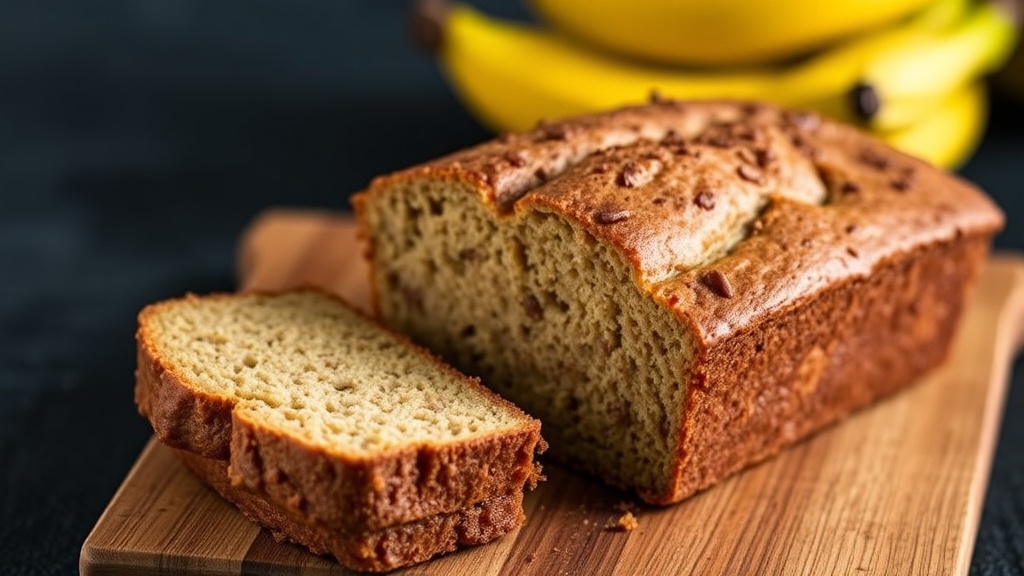
One-Bowl Gluten-Free Banana Bread That Actually Tastes Amazing

This post delivers a tested one-bowl gluten-free banana bread recipe that rivals any wheat-based version. You'll learn why most gluten-free banana breads fail (gummy centers, gritty crumb, flat flavor), which flours actually work, and how to avoid the common pitfalls that waste expensive ingredients. Whether you're baking for Celiac-safe household eating or just want a reliable weekend loaf, this method removes the guesswork.
Why Does Gluten-Free Banana Bread Turn Out Gummy?
Gluten-free banana bread turns gummy because excess moisture gets trapped when there's no gluten network to create an open crumb structure. Without the protein strands that wheat flour provides, batters made with rice or starches can set on the outside while the interior steams into a pale, rubbery mass. The result? A loaf that looks golden on top but clings to the knife like pudding.
Bananas are already moisture bombs. A standard loaf uses two to three medium overripe bananas—that's a lot of wet pulp competing with dry flour. In wheat baking, gluten helps suspend that moisture in a web of air pockets. Remove it, and you're left with starch granules that gelatinize into a dense gel unless the formula is adjusted.
Here's the thing: the fix isn't just adding more flour. That dries out the crumb and leaves you with a chalky brick. The real solution lies in controlling hydration ratios, choosing the right starch blend, and building structure through other means. Eggs, a touch of xanthan gum, and precise mixing all play roles. (Over-mixing wheat bread develops gluten; under-mixing gluten-free batters leaves pockets of dry flour. It's a different dance entirely.)
Another sneaky culprit is resting time. Many bakers pour batter straight into the pan and bake immediately. Letting the batter sit for ten to fifteen minutes allows the flours—especially brown rice and sorghum—to fully absorb liquid. That resting step transforms a soggy loaf into one with a tender, even crumb.
What's the Best Gluten-Free Flour for Banana Bread?
The best gluten-free flour for banana bread is a 1-to-1 blend that contains a balance of whole grains and starches, such as King Arthur Measure for Gluten-Free Flour or Bob's Red Mill 1-to-1 Gluten-Free Baking Flour. These blends already include xanthan gum and are formulated to mimic all-purpose flour in quick breads. Single-ingredient flours like almond or coconut? They'll give you a loaf, but the texture and moisture behave so differently that the recipe needs heavy reworking.
Not all blends are created equal. Some lean heavily on white rice flour and potato starch, which can produce a slightly gritty mouthfeel. Others use more tapioca and brown rice, yielding a softer, more cohesive crumb. For banana bread specifically—where moisture is already high—you want a blend that doesn't rely too heavily on pure starches. Too much tapioca or potato starch amplifies the gummy risk.
Worth noting: Cup4Cup Multipurpose Flour performs well in this recipe, though it contains milk powder, so it's not dairy-free. If you're avoiding both gluten and dairy, King Arthur's blend is the safer bet. America's Test Kitchen has extensively tested gluten-free flour blends and consistently rates those with a mix of whole grain and starch superior for quick breads.
| Flour Blend | Best For | Contains Xanthan Gum | Dairy-Free? |
|---|---|---|---|
| King Arthur Measure for Gluten-Free | Soft, moist crumb | Yes | Yes |
| Bob's Red Mill 1-to-1 | Structured, hearty loaf | Yes | Yes |
| Cup4Cup Multipurpose | Tender, cake-like texture | Yes | No |
| Krusteaz Gluten-Free All-Purpose | Budget baking | No | Yes |
For this one-bowl method, King Arthur Measure for Gluten-Free Flour is the recommended starting point. It produces a loaf with a tight, even crumb that slices cleanly and doesn't crumble apart when buttered.
How Do You Keep Gluten-Free Banana Bread Moist Without Making It Dense?
You keep gluten-free banana bread moist by using oil instead of butter, adding an extra egg yolk, and letting the batter rest before baking. Oil coats the starch granules more effectively than butter, trapping moisture without the weight of solid fat. The extra yolk adds fat and emulsifiers that create a silky, tender texture—exactly what gluten-free quick breads need.
Butter tastes great. No argument there. In wheat banana bread, creaming butter with sugar builds air pockets that lift the loaf. Gluten-free batters don't hold that structure as well, so the air escapes and you're left with a denser crumb. Neutral oil—avocado, grapeseed, or even light olive oil—creates a more consistent, moist interior. (If you want butter flavor, brown the butter first, then swap it half-and-half with oil. That's a chef's trick that works beautifully here.)
The extra egg yolk is non-negotiable in this recipe. Whole eggs provide structure, but the yolk specifically adds lecithin—a natural emulsifier that binds water and fat. In gluten-free baking, where structure is already compromised, that binding power keeps the crumb supple instead of dry or crumbly. Don't waste the white; use the whole egg plus one extra yolk.
Here's the thing about resting: it isn't optional. After mixing, cover the bowl and let the batter sit at room temperature for ten minutes. This allows the brown rice flour and any starches to fully hydrate. The batter will thicken slightly, which is exactly what you want. A thicker batter rises better and bakes more evenly, preventing that dreaded raw center.
Can You Really Make Gluten-Free Banana Bread in One Bowl?
Yes—this gluten-free banana bread comes together in one bowl by mixing wet ingredients first, then folding in the dry ingredients directly on top. No separate bowls, no stand mixer, no unnecessary dishes. The method works because gluten-free batters don't require the delicate handling that wheat batters do. There's no gluten to over-develop, so stirring until just combined is both simple and effective.
Start with very ripe bananas. The peels should be heavily spotted—almost black. These bananas mash easily and deliver the deepest sweetness. Mash them directly in a large mixing bowl with a fork, leaving some small lumps for texture. Add the oil, eggs, sugar, and vanilla, then whisk until smooth.
The catch? You have to measure the flour correctly. Spoon the flour blend into the measuring cup and level it off with a knife. Scooping directly from the bag packs the flour down, which can add up to a quarter cup of extra dry ingredients. In gluten-free baking, that mistake turns a moist loaf into sawdust.
Once the wet ingredients are combined, add the flour, baking soda, salt, and any spices directly on top. Stir with a wooden spoon or silicone spatula until no dry streaks remain. The batter should be thick but pourable—like slow-moving pancake batter. If it looks too stiff, a splash of milk (dairy or oat) loosens it without harm.
The One-Bowl Gluten-Free Banana Bread Recipe
This loaf bakes in a standard 9x5-inch metal loaf pan. Glass pans work, but they retain heat longer and can over-brown the bottom. If using glass, reduce the oven temperature by 25°F and add five to ten minutes to the bake time.
Ingredients:
- 3 medium overripe bananas (about 1 1/2 cups mashed)
- 1/2 cup neutral oil (avocado, grapeseed, or light olive oil)
- 2 large eggs plus 1 egg yolk
- 3/4 cup packed brown sugar
- 1 teaspoon pure vanilla extract
- 2 cups King Arthur Measure for Gluten-Free Flour
- 1 teaspoon baking soda
- 1/2 teaspoon fine sea salt
- 1 teaspoon ground cinnamon
- 1/4 teaspoon xanthan gum (only if your flour blend doesn't include it)
- Optional: 1/2 cup walnuts or mini chocolate chips
Instructions:
- Preheat the oven to 350°F (175°C). Grease a 9x5-inch metal loaf pan and line it with parchment paper, leaving an overhang for easy removal.
- In a large bowl, mash the bananas with a fork until mostly smooth with some small lumps remaining.
- Add the oil, eggs and extra yolk, brown sugar, and vanilla. Whisk until fully combined.
- Add the gluten-free flour directly on top of the wet mixture. Sprinkle the baking soda, salt, cinnamon, and xanthan gum (if needed) over the flour.
- Stir with a spatula until just combined and no dry flour is visible. Fold in walnuts or chocolate chips if using.
- Let the batter rest in the bowl for 10 minutes at room temperature. This step hydrates the flour fully.
- Pour the batter into the prepared pan and smooth the top. Bake for 55 to 65 minutes, until a toothpick inserted into the center comes out with just a few moist crumbs.
- Cool in the pan for 15 minutes, then lift the loaf out using the parchment overhang and transfer to a wire rack to cool completely—at least 1 hour before slicing.
How Do You Know When Gluten-Free Banana Bread Is Done?
Gluten-free banana bread is done when a toothpick inserted into the center returns with a few moist crumbs clinging to it—but no wet batter. Because gluten-free loaves retain more moisture, waiting for a completely dry toothpick often means over-baking. The internal temperature should reach 200°F to 205°F on an instant-read thermometer.
The top should be deeply golden brown and slightly cracked. Those cracks are a good sign—they indicate the loaf rose and the center has set. If the top is browning too quickly before the center is done, tent the pan loosely with aluminum foil after the 35-minute mark.
Patience during cooling is just as important as baking time. Gluten-free starches need time to set as they cool. Slicing too early releases steam and creates a gummy texture, even in a perfectly baked loaf. Wait the full hour. (Hard, yes. Necessary, absolutely.)
Storage and Freezing Tips
This banana bread stays moist at room temperature for up to two days when wrapped tightly in plastic wrap. For longer storage, refrigerate it for up to five days. The cold will firm up the crumb slightly—bring slices to room temperature or warm them in a toaster oven before serving.
To freeze, wrap the completely cooled loaf in plastic wrap, then in aluminum foil. It keeps well for up to three months. Slice and toast individual pieces straight from the freezer. For more information on safe gluten-free food handling and cross-contamination prevention, the Celiac Disease Foundation offers excellent resources.
Common Substitutions
Need to adapt further? Here are tested swaps that work within this one-bowl framework:
- Dairy-free: This recipe is already dairy-free as written. Just avoid Cup4Cup flour, which contains milk powder.
- Egg-free: Replace each egg with a "flax egg" (1 tablespoon ground flaxseed mixed with 3 tablespoons water). The texture will be slightly denser but still pleasant.
- Lower sugar: Reduce the brown sugar to 1/2 cup. The bananas provide plenty of natural sweetness, though the crumb will be slightly less tender.
- Add-ins: Walnuts add welcome texture contrast. For chocolate lovers, Enjoy Life mini chocolate chips are a reliably gluten-free and dairy-free option.
Great gluten-free banana bread isn't about masking the absence of wheat—it's about building a loaf that stands on its own. The right flour blend, a rested batter, and a few chef-level tweaks turn a notoriously tricky bake into something you'll make on repeat. Slice it thick, spread it with butter (or your favorite dairy-free alternative), and enjoy a banana bread that finally tastes as good as it looks.