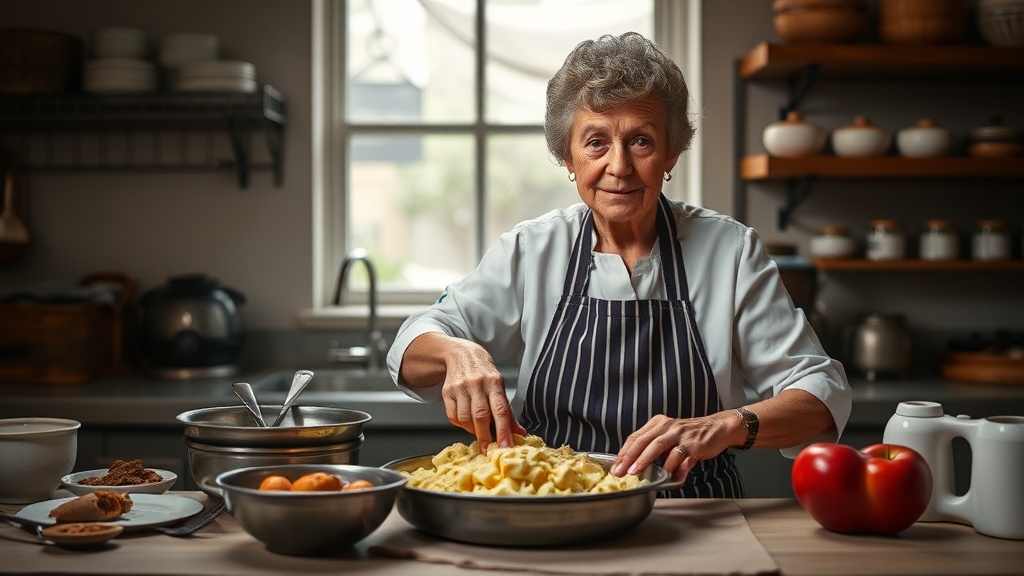
Rescuing Your Grandmother's Recipes: A Chef's Method for Gluten-Free Conversion

This guide will teach you a professional chef's systematic approach to converting treasured family recipes into gluten-free versions that actually taste like you remember—no gritty textures, no gummy centers, and no sad compromises. You'll learn the precise substitution ratios, binding techniques, and moisture adjustments that separate amateur attempts from results that would make your grandmother proud.
Why Do Most Gluten-Free Conversions Taste Wrong?
The problem isn't your grandmother's recipe—it's the approach. Most home cooks treat gluten-free conversion like a simple swap: remove wheat flour, add a gluten-free blend, hope for the best. That's like replacing a violin with a kazoo and expecting the same symphony.
Gluten does four distinct jobs in baking: it provides structure (the skeleton that holds everything up), creates elasticity (that satisfying chew in bread), traps gases (those beautiful air pockets), and contributes to browning (the Maillard reaction that creates depth of flavor). A simple one-to-one flour swap addresses maybe one of these functions. The rest? You're leaving them to chance—and your taste buds notice.
After fifteen years in professional kitchens and eight years managing Celiac disease, I've developed a three-phase conversion method that treats gluten replacement as reconstruction, not substitution. Each phase targets a specific function gluten used to perform. Miss one, and your results suffer. Nail all three, and you'll serve cookies that silence the room.
What's the Exact Process for Converting Baking Recipes?
Phase one is structural engineering. Gluten-free flours don't bind the same way wheat flour does—you need reinforcements. For every cup of all-purpose flour you're replacing, use a blend of 60% finely ground brown rice flour, 30% tapioca starch, and 10% potato starch. This isn't arbitrary; brown rice provides bulk and protein structure, tapioca adds chew and binding, and potato starch creates tenderness.
But the flour blend alone won't save you. You need a binding system. For every cup of flour blend, add one teaspoon of xanthan gum for cakes and cookies, or one-and-a-half teaspoons for bread and pizza dough. Xanthan gum mimics gluten's stretchiness—it creates that network that holds ingredients together when you pull a warm cookie apart. Without it, your baked goods crumble like sandcastles.
Here's where most conversions fail: moisture management. Gluten-free flours are thirsty—much thirstier than wheat. They absorb liquid differently, and they keep absorbing it as they sit. For every cup of gluten-free flour blend, increase your liquid by 25%. That might mean an extra egg, more milk, or additional oil depending on your recipe. Your batter should look slightly looser than you're comfortable with; it'll tighten up during baking.
Phase two addresses texture manipulation. Gluten-free baked goods often suffer from dense, heavy textures because there's no gluten network trapping air. You need mechanical solutions. Whip your eggs separately until they're pale and voluminous—this incorporates air mechanically since you can't rely on gluten's gas-trapping abilities. For cakes, fold whipped egg whites into your batter. For cookies, cream your butter and sugar for a full three minutes (set a timer—most people under-cream).
Acid is your secret weapon here. Add a teaspoon of apple cider vinegar or lemon juice to your liquid ingredients. The acid reacts with your leavening agents more aggressively, creating extra lift and counteracting the density that plagues gluten-free baking. It also tenderizes the starches, preventing that gummy texture that makes so many gluten-free goods feel undercooked.
Phase three is flavor amplification. Here's an uncomfortable truth: gluten-free flours taste different. Brown rice has nutty notes, tapioca adds sweetness, and potato starch can taste—well, starchy. You need to build flavor layers that compensate.
Toast your flours before using them. Spread them on a baking sheet and bake at 300°F for 10-12 minutes until they smell nutty. This deepens their flavor and eliminates the raw starch taste that screams "gluten-free." Double your vanilla extract—alcohol carries flavor compounds, and gluten-free batters need the help. Add a pinch of espresso powder to chocolate recipes; it amplifies chocolate without making things taste like coffee.
How Do You Convert Savory Recipes Like Sauces and Gravies?
Thickeners in savory cooking require different thinking. Wheat flour in a roux does two jobs: thickening and adding flavor through browning. You can replicate this, but you need the right tools.
For pan sauces and gravies, skip the all-purpose gluten-free blends entirely—they'll turn gummy and opaque. Instead, use sweet rice flour (also called glutinous rice flour, which confusingly contains no gluten). It creates silky, glossy sauces without the grittiness that ruins so many gluten-free gravies. Use it exactly as you'd use wheat flour—one tablespoon per cup of liquid for a thin sauce, two for something coating a spoon.
Want that nutty roux flavor? Toast your sweet rice flour in a dry pan until it's golden and smells like popcorn, then make your roux. You're building the same flavor compounds that make traditional gravies irresistible. For cream-based sauces, cornstarch works beautifully—use half as much cornstarch as you would flour, and make a slurry with cold liquid before adding to hot sauce to prevent lumps.
Beer batter and breading present unique challenges. Standard gluten-free beers exist, but most lack the carbonation and protein structure needed for crisp coatings. Instead, use club soda or seltzer mixed with a little rice flour and cornstarch. The carbonation creates instant bubbles that fry up shatteringly crisp. For breading that actually sticks, use the standard three-step process: rice flour dredge, egg wash (add a teaspoon of mustard—it helps adherence), then gluten-free breadcrumbs or crushed certified gluten-free cereal.
Pasta sauces need attention too. Many commercial gluten-free pastas release excess starch into boiling water—that water is liquid gold for sauce consistency. Before draining, scoop out a cup of that starchy cooking water. Add it to your sauce along with the drained pasta, tossing vigorously. The released starch emulsifies your sauce, helping it cling to every ridge and curve instead of pooling sadly at the bottom of the bowl.
What Are the Most Common Mistakes to Avoid?
Overmixing is the cardinal sin—except in gluten-free baking. Traditional wisdom says don't overmix or you'll develop tough gluten. Without gluten, that rule vanishes. You actually want to beat gluten-free batters longer to incorporate air and fully hydrate the starches. That three-minute creaming rule? It's not optional.
Temperature betrayal ruins more conversions than bad recipes. Gluten-free doughs and batters are temperature-sensitive in ways wheat-based versions aren't. Cold butter won't cream properly with gluten-free flours; room temperature is mandatory. Baked goods go from perfectly done to dry and crumbly in minutes—start checking five minutes before the recipe suggests. And for the love of all things holy, let things cool completely before judging them. Gluten-free baked goods continue setting as they cool, and they taste radically different warm versus room temperature.
Ingredient temperature matters too. Cold eggs won't incorporate properly into room-temperature butter when you're using gluten-free flours—the emulsion breaks more easily. Set everything out an hour before baking. Yes, even in summer. Yes, even when you're in a hurry.
The biggest mistake? Giving up after one attempt. Gluten-free conversion is trial and error because every family recipe is different. Some need more liquid, others need less xanthan gum, a few might require an additional egg yolk for richness. Document your changes. When something works, write it down—your future self will thank you when Thanksgiving rolls around and you need those dinner rolls to work on the first try.
Remember: your grandmother's recipe isn't sacred scripture—it's a starting point. She'd want you to adapt, to make it work for your kitchen and your body. The spirit of the recipe—the proportions, the techniques, the love—matters more than the specific ingredients. Convert with confidence, bake with precision, and serve with pride.
For deeper understanding of Celiac disease and gluten-related disorders, consult the Celiac Disease Foundation. The Beyond Celiac resource center offers excellent guidance on living gluten-free. For scientific backing on gluten-free flour functionality, refer to ScienceDirect's gluten-free research compilation.