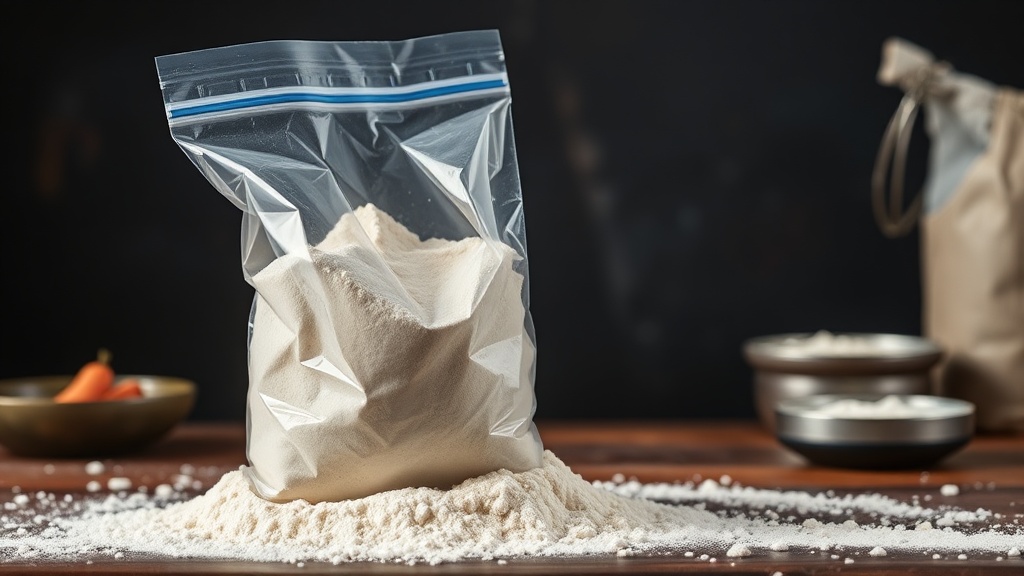
Why Your Gluten-Free Flour Is Clumping in the Bag

Quick Tip
Store your gluten-free flour blends in airtight containers in a cool, dry place to prevent moisture absorption.
Why Your Gluten-Free Flour Is Clumping in the Bag
A baker opens a fresh bag of King Arthur Measure for Less Gluten-Free All-Purpose Flour, expecting a fine, uniform powder, but instead finds hard, stubborn lumps that refuse to break apart with a simple spoon. This isn't just a nuisance; it can ruin the hydration levels of a recipe and lead to unevenly textured breads or cakes. Understanding why these clumps form is essential for maintaining the precision required in gluten-free baking.
The primary culprit behind clumping in gluten-free flour is moisture absorption. Unlike traditional wheat flour, gluten-free blends often rely heavily on starches like tapioca, potato, or rice flour. These starches are highly hygroscopic, meaning they actively pull moisture from the air. If a bag is left even slightly ajar, or if it is stored in a high-humidity environment like a pantry near a steaming kettle, the starches will swell and bind together, creating those frustrating lumps.
Common Causes of Flour Clumping
- Temperature Fluctuations: Moving a bag from a cold grocery store to a warm kitchen can cause condensation to form inside the packaging, leading to rapid clumping.
- Inadequate Sealing: Many gluten-free flours come in paper bags that are not airtight. Once the seal is broken, the flour is vulnerable to ambient humidity.
- Oil Oxidation: If your blend contains high amounts of nut flours (like almond flour) or seeds, the natural oils can react to heat and light, causing the particles to stick together.
How to Prevent and Fix the Problem
To ensure your flour remains professional-grade, follow these technical storage and preparation steps:
- Use Airtight Containers: Immediately transfer your flour from the original paper bag into a glass or heavy-duty BPA-free plastic container with a silicone seal. This creates a true moisture barrier.
- Store in a Cool, Dark Place: Avoid storing your flours above the stove or near the dishwasher, where steam and heat are constant.
- Sift Before Using: If you encounter small clumps, do not simply stir them in. Use a fine-mesh sieve to sift the flour. This ensures your leavening agents are evenly distributed and prevents "flour pockets" in your batter.
If your flour is clumping because of oil degradation, you may also notice a bitter scent. If this occurs, it is best to discard the batch, as it can impact the flavor profile of your bake. If you are struggling with texture issues after sifting, you may also want to review why your gluten-free baked goods are not rising, as uneven flour distribution can directly impact your bake's structure.