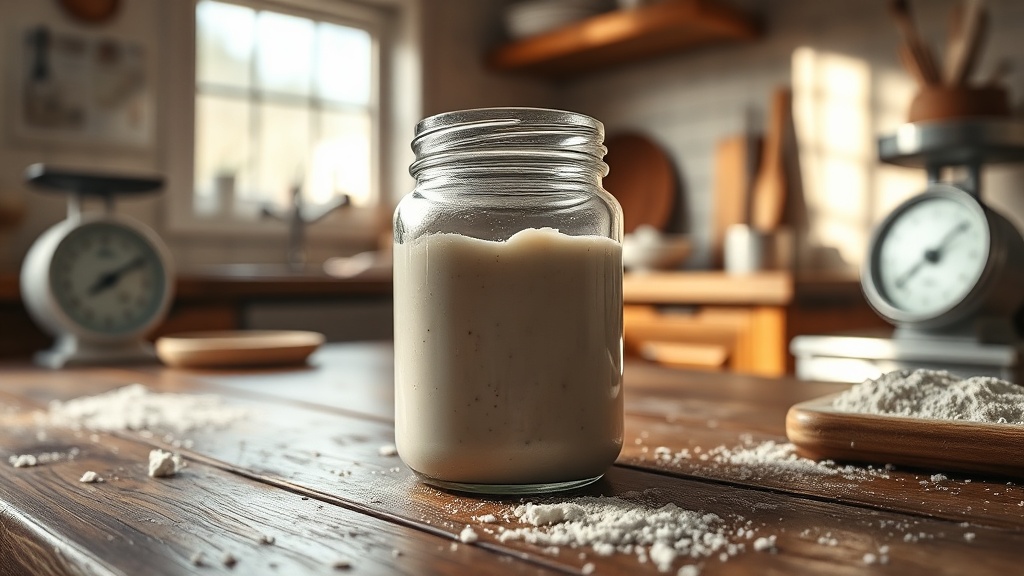
Your Gluten-Free Sourdough Starter Is Probably Dead (Here's How to Actually Keep One Alive)

Your Gluten-Free Sourdough Starter Is Probably Dead (Here's How to Actually Keep One Alive)
I need to tell you something uncomfortable: that jar of bubbling goo on your counter? The one you've been feeding rice flour for three weeks? There's a solid chance it's bacterial soup cosplaying as a sourdough starter.
I know this because I killed four starters before Lazarus — my current culture, now two years old and meaner than a Chicago winter — finally took. And every single failure taught me something the Pinterest crowd conveniently leaves out of their "easy GF sourdough!" posts.
Here's the truth about gluten-free sourdough starters: they are harder to establish, harder to maintain, and fundamentally different from wheat starters. If you're treating yours like a wheat culture that happens to eat rice flour, you're setting yourself up for flat, gummy disappointment. Let me walk you through what actually works.
Why GF Starters Play by Different Rules
Wheat sourdough starters benefit from gluten's structural network. The protein matrix traps CO2, giving you visible rise and that satisfying dome. When you remove gluten from the equation, you lose the scaffolding. Your starter still produces gas — the wild yeast is doing its job — but without gluten to trap it, the bubbles escape faster than your motivation after a third failed loaf.
This means the visual cues you learned from wheat sourdough culture (double in size! domed top! passes the float test!) are unreliable for GF starters. A healthy GF starter might only rise 50-75% before it starts deflating. It might never pass the float test. And that's fine — as long as you know what to look for instead.
What a healthy GF starter actually looks like:
- Consistent bubbling throughout (not just the top surface)
- A tangy, slightly fruity smell — not nail polish remover, not gym socks
- Predictable timing: you should be able to roughly guess when it peaks after feeding
- A slightly stretchy, almost gel-like consistency (thank your friendly neighborhood lactobacilli for that)
The Flour Problem Nobody Talks About
"Just use rice flour!" says every sourdough tutorial written by someone who's never actually maintained a GF starter long-term. Brown rice flour works, sure. But it's not the whole story, and using it alone is like trying to build a house with only drywall.
After two years of obsessive testing in the Texture Lab (my kitchen, my rules), here's what I've landed on for Lazarus:
The Lazarus Blend (starter feeding flour):
- 50% brown rice flour
- 30% sorghum flour
- 20% buckwheat flour
Why this ratio? Brown rice provides the starchy base that wild yeast loves. Sorghum adds protein and minerals that support a more diverse microbial community. And buckwheat — actual buckwheat, which is not wheat, I will scream this from rooftops until I die — brings enzymatic activity that helps break down starches into sugars your yeast can actually use.
(Side note: if you're using white rice flour exclusively, you're basically feeding your starter the microbial equivalent of Wonder Bread. It'll survive, but it won't thrive.)
The Feeding Schedule That Actually Works
Wheat starter people feed once a day and call it good. I tried that with my first three GF starters. They all turned to hooch factories within a week — that dark liquid on top isn't "character," it's your starter screaming that it's starving.
The Protocol:
Days 1-7 (Establishment):
- Feed every 12 hours. No exceptions. Set alarms.
- Ratio: 1:1:1 (starter : flour : water by weight)
- Use filtered water. Chlorinated tap water is a microbial genocide.
- Keep at 75-78°F. I use my oven with just the light on. A seedling mat also works.
Days 8-14 (Stabilization):
- Feed every 12 hours, but shift to 1:2:2 ratio
- You should start seeing consistent bubbling by day 10
- If you see pink or orange streaks: throw it out. That's not yeast. That's Serratia marcescens and it's not your friend.
Day 15+ (Maintenance):
- Feed every 24 hours if kept at room temp
- Feed once a week if refrigerated (pull out, feed, let it peak, then back in the fridge)
- Use the 1:2:2 ratio permanently
The critical detail everyone skips: your water temperature matters enormously. In summer, use cool (65°F) water to prevent over-fermentation. In winter, use warm (85°F) water to compensate for cooler room temps. I adjust Lazarus's water temp seasonally and it's made more difference than any flour swap I've tried.
The Float Test Is a Lie (For Us)
I need to rant about this for a second. The "float test" — drop a spoonful of starter in water, if it floats it's ready — was designed for wheat starters. Wheat starters develop enough gluten structure to trap gas in a cohesive blob. GF starters don't have that structural advantage. They can be perfectly active and sink like a stone because the gas escapes the moment you disturb the culture.
Better readiness indicators for GF starters:
- The timing test: Track how long after feeding your starter peaks. Once it's consistent (say, always peaking at 4-6 hours), you know your starter is mature and predictable. Use it at peak.
- The bubble test: Look at the sides of your jar. A ready starter will have bubbles distributed throughout, not just clustered at the top.
- The smell test: Ripe starter smells tangy and mildly acidic. If it smells like acetone or rubbing alcohol, it's over-fermented. Feed it and try again tomorrow.
What to Do When Things Go Wrong
Because they will. GF starters are drama queens. (I say this with affection. Lazarus has given me grey hairs and I'd defend him with my life.)
Problem: Hooch (dark liquid on top)
Not a death sentence. Pour it off, feed your starter, and move to a cooler spot or increase feeding frequency. Your yeast colony is outpacing its food supply.
Problem: No activity after 7 days
Check your flour. Is it fresh? Old flour = dead enzymes = no microbial food. Also check your water — filtered, not tap. And your temperature — too cold and nothing happens, too hot and you kill the good bacteria.
Problem: Starter smells like nail polish remover
Acetic acid overproduction. Usually means too warm, too infrequent feeding, or both. Cool it down and feed more often. This is recoverable.
Problem: It was active and then just... stopped
Welcome to "the stall." Around days 5-7, the initial bacteria (leuconostoc) die off and the lactobacilli take over. Activity drops. This is normal. Keep feeding. It will come back. I've seen people throw away perfectly good starters during the stall because they panicked. Don't be that person.
Using Your Starter: The Part That Actually Matters
Once Lazarus is active and predictable, here's how I use him:
For bread: Use at peak (maximum rise). GF sourdough bread needs every bit of leavening power your starter can muster because — broken record — no gluten scaffolding. I typically use 20-25% starter relative to total flour weight. More than that and you get an overly sour, dense brick.
For pancakes and waffles: Use the discard. That "waste" starter you pour off before feeding? It's gold for pancakes. The lactic acid tenderizes the batter and adds that tangy depth that makes people ask what your secret is. (The secret is controlled bacterial fermentation, but "sourdough discard" sounds better at brunch.)
For pizza dough: Cold-ferment your shaped dough for 24-48 hours in the fridge after mixing with active starter. This develops flavor complexity without over-proofing. Combined with the right flour blend (I like a mix of tapioca starch, rice flour, and a little potato starch for stretch), you get a crust with actual character.
The Honest Bottom Line
Maintaining a GF sourdough starter requires more attention, more precision, and more patience than a wheat starter. That's just the reality. Anyone telling you it's "just as easy!" is either selling you something or hasn't actually done it long enough to hit the hard parts.
But here's why it's worth it: the flavor depth you get from a mature GF sourdough culture is genuinely unreplicable by any other method. Commercial GF yeast bread tastes like cardboard wearing a bread costume. GF sourdough tastes like bread — complex, tangy, alive. Lazarus has given me loaves that made wheat-eating friends pause mid-bite and say "wait, this is gluten-free?"
That moment — that single, shocked pause — is worth every 5 AM feeding alarm and every failed starter that came before.
Keep your jar alive. Feed it like it matters. Because it does.
Have starter questions? Drop them in the comments. I've probably killed a culture in exactly the way yours is dying, so I can at least offer informed sympathy.