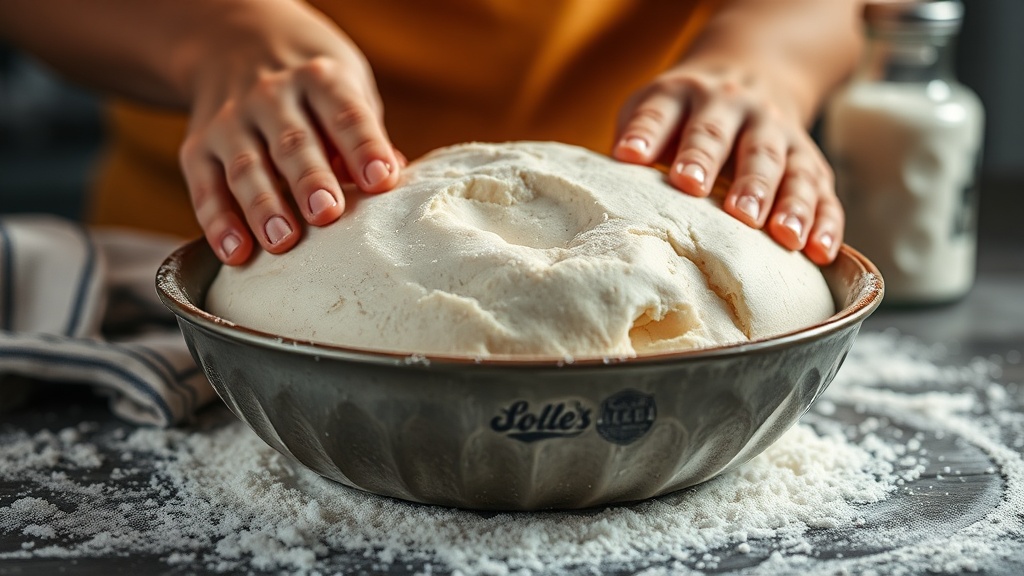
Stop Using Cold Water for Your Gluten-Free Dough

Quick Tip
Using room temperature liquids instead of cold water helps activate starches more effectively for a better crumb.
In this tip, you'll learn why using warm or room-temperature water—rather than ice-cold water—can prevent the gritty, crumbly texture common in gluten-free doughs. Temperature control is the difference between a cohesive dough and a pile of wet sand.
Why Should You Use Warm Water for Gluten-Free Dough?
Warm water helps hydrate the starches and gums more effectively than cold water. Because gluten-free flours—like the blends from Bob's Red Mill—lack the elastic protein found in wheat, we rely heavily on hydrocolloids like xanthan gum or guar gum to create structure. These binders need heat to "activate" and fully integrate with the flour particles.
If you use cold water, the starches often remain partially unhydrated. This leads to a dough that feels broken or "short." It's a common mistake that results in a dense, unappealing loaf. (I've seen many home bakers struggle with this exact issue during my testing sessions.)
Using slightly warm water ensures that the moisture reaches the center of every grain, creating a more uniform consistency. If you're struggling with a dough that feels too stiff or uneven, you might want to look into fixing texture issues in gluten-free bread making.
Does Water Temperature Affect Dough Hydration?
Yes, water temperature directly dictates how quickly and thoroughly your flour blends absorb moisture. Higher temperatures increase the kinetic energy of the water molecules, allowing them to penetrate the starch granules faster.
Here is a quick breakdown of how temperature affects your ingredients:
| Water Temperature | Effect on Dough | Typical Result |
|---|---|---|
| Ice Cold | Slow starch hydration | Gritty texture, crumbly edges |
| Room Temp | Standard hydration | Consistent, predictable dough |
| Warm (95°F-105°F) | Rapid starch gelatinization | Smooth, elastic, cohesive dough |
How Can I Tell if My Dough is Properly Hydrated?
Your dough is properly hydrated when it reaches a smooth, tacky consistency rather than a sticky, liquid one. A well-hydrated dough should hold its shape when pressed, showing a slight sheen without being overly messy.
Watch for these signs during your mixing process:
- The "Tack" Test: The dough should feel slightly tacky to the touch, not wet or slimy.
- Visual Uniformity: You shouldn't see distinct white flecks of unabsorbed flour.
- Structural Integrity: The dough should hold its shape when you lift a portion of it with a spatula.
Worth noting: If you are making a pastry or a pie crust, you might actually want to revert to cold liquids to prevent fat melting. But for bread or pizza dough? Heat is your friend. For more on choosing the right base, check out the ultimate guide to gluten-free flour blends.