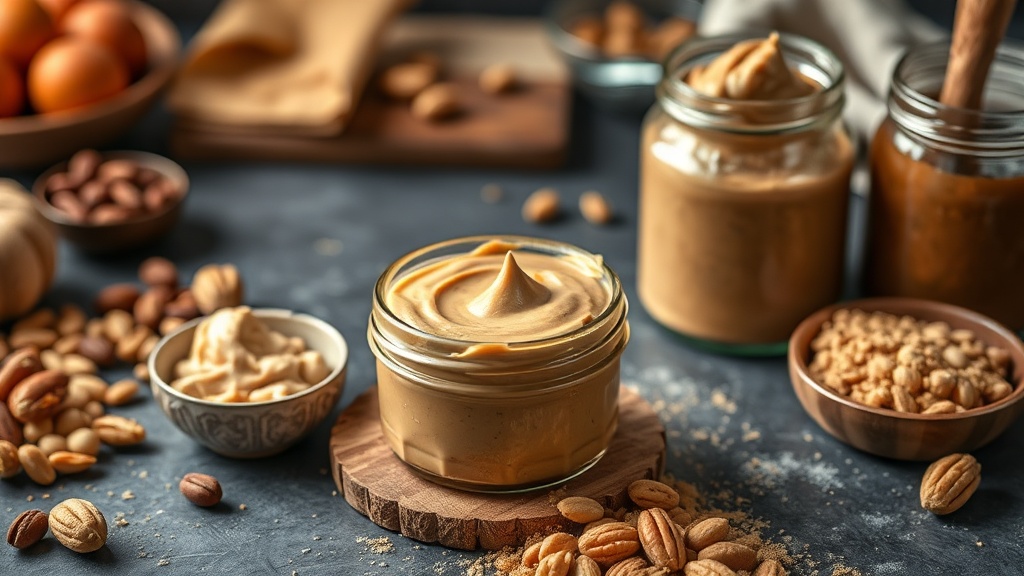
The Alchemy of Nut Butters: Crafting Creamy, Gluten-Free Protein Staples

The heavy, rhythmic drone of a high-speed Vitamix processor fills the kitchen, a sound that precedes the transformation of hard, roasted almonds into a liquid silk. Inside the clear polycarbonate pitcher, the temperature rises. What began as dry, jagged kernels is steadily yielding to kinetic energy, releasing their essential oils. A thin, translucent sheen appears on the sides of the jar, and suddenly, the friction produces a glossy, pale gold paste that moves with the viscosity of heavy cream. This is the moment of emulsification, the precise point where heat, fat, and mechanical force converge to create a perfect nut butter.
For those navigating a gluten-free lifestyle, the pursuit of high-quality protein often leads to the pantry shelf, where the quality of nut butters can vary wildly. While many commercial brands rely on emulsifiers or hydrogenated oils to maintain a consistent spread, the discerning palate demands something purer. A truly exceptional nut butter should rely solely on the inherent oils of the nut itself. Achieving this texture at home requires an understanding of lipid science and the specific mechanical requirements of different nut varieties.
The Science of Emulsification and Lipid Release
The fundamental challenge in creating a smooth nut butter is the liberation of oils. Every nut contains a specific ratio of protein, fiber, and fat. During the grinding process, the mechanical action breaks down the cellular structure of the nut, allowing the internal oils to seep out. This is not merely a physical change; it is a thermal one. As the friction from the blades generates heat, the viscosity of the oils decreases, making them easier to incorporate into a homogeneous emulsion.
If the temperature does not reach a specific threshold—usually between 120°F and 140°F—the oils will remain trapped within the solid particles, resulting in a gritty, "sand-like" texture. To avoid this, one must use a high-speed blender or a dedicated nut butter grinder rather than a standard food processor. A food processor often lacks the RPM (revolutions per minute) necessary to create the fine particle size required for a professional-grade finish. In a food processor, you are essentially chopping; in a high-speed blender, you are emulsifying.
Selecting the Raw Materials: The Foundation of Flavor
The quality of your final product is dictated entirely by the quality of your starting ingredient. When shopping for bulk nuts to make your own, look for "dry roasted" rather than "oil roasted." Many commercial roasted nuts are tossed in vegetable oils or soy oil to enhance crunch, which can lead to a greasy, heavy mouthfeel in a homemade butter. For a superior result, source organic, raw, or dry-roasted almonds, cashews, or hazelnuts from reputable suppliers like Kirkland Signature or specialized nut wholesalers.
- Almonds: These provide a neutral, slightly sweet base. For a more robust flavor, use Marcona almonds, which offer a higher oil content and a more delicate skin.
- Cashews: The gold standard for creaminess. Cashews have a high starch-to-fat ratio, which results in an almost custard-like texture when processed.
- Hazelnuts: These are highly sensitive to heat. When making a Gianduja-style spread, it is vital to roast them lightly to ensure the oils are accessible without scorching the delicate nut proteins.
The Technical Workflow: A Step-by-Step Execution
To achieve a texture that rivals high-end artisanal brands, follow this technical progression. This method ensures that the moisture content remains near zero, which is critical for shelf stability and preventing the growth of bacteria in a gluten-free environment.
- The Roasting Phase: Even if using pre-roasted nuts, a quick "re-activation" in a 350°F oven for 5-8 minutes can be transformative. This gentle heat loosens the oils and intensifies the Maillard reaction, deepening the nutty aroma.
- The Cooling Interval: Never grind warm nuts. Let the roasted nuts cool to room temperature. If you grind them while they are hot, the oil will release too quickly, potentially creating a "soup" that is difficult to thicken back up.
- The Grinding Stages: Begin with the dry nuts in a high-speed blender. The process usually follows three distinct stages: the crumb stage (small particles), the paste stage (thick, heavy mass), and the liquid stage (fluid, flowing butter).
- The Additive Integration: If you intend to add flavor—such as sea salt, maple syrup, or cacao powder—add them during the "paste stage." Adding liquids too early can cause the proteins to seize, creating a clumped, unappealing texture.
"The difference between a mediocre nut butter and a professional one lies in the micron size of the nut particles. A truly smooth butter has a particle size of less than 30 microns, invisible to the human tongue."
Troubleshooting Common Texture Failures
Even with high-quality ingredients, several variables can derail the process. Understanding these nuances allows for real-time adjustments during the blending process.
The "Grainy" Texture
If your nut butter feels gritty, it is likely due to one of two reasons: insufficient processing time or an uneven particle size. If you are using a standard food processor, the blades may be hitting the nuts too infrequently to achieve a fine emulsion. To fix this, continue processing for longer intervals, allowing the motor to heat the mixture. If the mixture becomes too thick and the blades are spinning in an air pocket, add one teaspoon of neutral, high-quality oil (such as avocado oil) to help the blades catch the mass.
The "Oily Separation" Issue
Many people assume that if the oil separates at the top of the jar, the product is "bad." In reality, this is a sign of a pure, un-emulsified product. For a natural, gluten-free staple, this is actually a mark of quality. To resolve this for immediate use, stir the jar vigorously. For a long-term solution, ensure you have processed the nuts until they reach the "liquid stage" described earlier. The more vigorous the mechanical action, the more stable the emulsion will be.
The "Clumping" Phenomenon
When adding ingredients like cocoa powder or cinnamon, the mixture may suddenly turn into a thick, unmanageable dough. This is a common reaction when dry, fine powders absorb the released oils. To prevent this, sift your dry additives through a fine-mesh sieve to ensure there are no clumps, and add them incrementally. If clumping occurs, add a small amount of liquid oil and increase the blender speed to force the emulsion back into a liquid state.
Elevating the Flavor Profile: Beyond the Basic Spread
Once you have mastered the base emulsion, the possibilities for culinary application are vast. A high-quality nut butter is not just a topping; it is a foundational ingredient for sophisticated gluten-free cooking. Consider the following flavor profiles to expand your pantry's utility:
The Savory Umami Base: Combine creamy cashew butter with white miso paste and a splash of tamari. This creates a rich, savory component that works beautifully as a base for a gluten-free satay sauce or a thickener for vegetable stews. This technique is particularly effective when working with fermented gluten-free condiments to add depth and acidity.
The Dark Chocolate Decadence: For a sophisticated dessert component, blend roasted hazelnuts with high-percentage dark chocolate (ensure it is certified gluten-free) and a touch of Maldon sea salt. The result is a texture that is remarkably close to a professional Gianduja, perfect for filling gluten-free crepes or as a dip for fresh fruit.
The Spiced Morning Staple: Infuse an almond butter with cardamom and a hint of vanilla bean paste. This elevates a simple piece of gluten-free toast into a gourmet breakfast experience. The cardamom provides a floral top note that cuts through the heavy fat of the almond, providing a balanced, elegant mouthfeel.
By mastering the physics of the grind and the chemistry of the oil, you transform a simple pantry item into a tool of culinary precision. Whether you are seeking a reliable protein source or a luxurious ingredient for a complex dessert, the ability to craft your own nut butter ensures that you never have to settle for the mediocre options found in the commercial aisle.