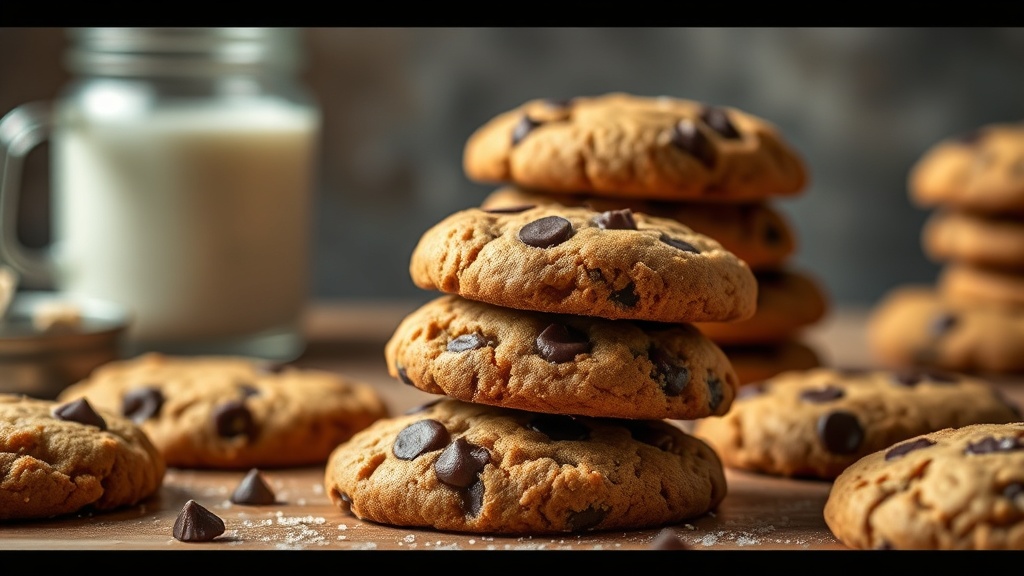
Why Your Gluten-Free Cookies Are Too Flat

You pull a tray of cookies out of the oven, expecting thick, soft mounds with slightly crisp edges, but instead, you are met with thin, greasy puddles that have spread across the entire baking sheet. This is a common frustration in gluten-free baking. Unlike traditional wheat-based doughs, which rely on a complex web of gluten to trap air and maintain structure, gluten-free doughs lack that internal scaffolding. Without the right balance of binders, starches, and temperature control, your cookies will inevitably collapse. This post breaks down the specific chemical and structural reasons your gluten-free cookies are losing their shape and how to fix them.
The Absence of Structure: Why Gluten Matters
In traditional baking, gluten provides the elasticity and strength required to hold gases produced by leavening agents. When you mix wheat flour with water, proteins called glutenin and gliadin bond to create a stretchy network. This network traps the carbon dioxide bubbles produced by baking soda or powder, allowing the cookie to rise upward and hold its shape. In gluten-free baking, we are essentially trying to mimic this structural integrity using starches and gums.
When your cookies turn out flat, it is usually because the "structure" of your recipe is too weak to support the weight of the fats and sugars. If your flour blend is too heavy on rice flour and lacks sufficient protein or hydrocolloids, the air bubbles will escape before the cookie sets, resulting in a pancake-like texture. This is a fundamental difference between working with a robust wheat dough and a more fragile gluten-free dough.
The Role of Binders and Hydrocolloids
Since you cannot rely on gluten, you must rely on binders like xanthan gum, guar gum, or psyllium husk. These ingredients act as the "glue" that holds the dry ingredients together and provides a semblance of elasticity. However, too much or too little can ruin your results.
The Xanthan Gum Balance
Xanthan gum is a polysaccharide that increases viscosity. If you use a high-quality blend like Bob’s Red Mill 1-to-1, it already contains xanthan gum. However, if you are mixing your own flour blend from scratch, you must be precise. Too little xanthan gum results in a cookie that crumbles or spreads too thin; too much can create a gummy, unappetizing texture that feels "slimy" on the palate. If you find your cookies are falling apart or spreading uncontrollably, you may need to increase your binder by a mere 1/4 teaspoon per cup of flour.
The Impact of Psyllium Husk
For recipes that require more "chew," such as a soft chocolate chip cookie, incorporating a small amount of finely ground psyllium husk can provide a more bread-like structure. Psyllium absorbs a significant amount of moisture, which helps stabilize the dough. This is a technique often used when trying to solve crumbly and dense gluten-free textures, and it works effectively in heavy cookie doughs as well.
Fat Temperature and Emulsification
One of the most frequent culprits of flat cookies is the temperature of your fats. In a professional kitchen, we monitor the state of our butter constantly. If your butter is too soft or has been over-creamed with sugar, the cookie will spread instantly upon hitting the heat of the oven.
The Danger of Over-Creaming
When you cream butter and sugar together, you are incorporating air. In wheat baking, the gluten will hold that air. In gluten-free baking, if you cream the mixture for too long, you create large air pockets that are too unstable. Once the heat hits the dough, those pockets collapse, and the fat flows outward. Aim for a creamy, pale consistency, but stop before the mixture becomes overly aerated and light.
Room Temperature vs. Melted Butter
If a recipe calls for "softened butter," ensure it is truly cool to the touch and not oily. If you are using a recipe that calls for melted butter, be aware that this will almost always result in a thinner, more spread-out cookie. To combat this, try chilling your dough for at least two hours before baking. Chilling the dough allows the starches to fully hydrate and the fats to solidify, which provides a much-needed "buffer" during the initial stages of baking.
The Importance of Starch vs. Protein
Gluten-free flour blends are usually a combination of a base flour (like brown rice flour or sorghum) and starches (like tapioca starch, potato starch, or cornstarch). The ratio of starch to protein is critical for height.
- High Starch Content: Increases the tendency to spread and can result in a crispy, thin cookie.
- Higher Protein/Base Flour Content: Provides more structural integrity and a softer, thicker center.
If your current favorite recipe produces flat cookies, check the ingredient list. If it is heavy on tapioca starch, it will likely spread more. To fix this, try replacing a portion of the starch with a more substantial flour like King Arthur Measure for Measure or a blend containing buckwheat or oat flour, which provides more structural "heft." For a deeper dive into how to optimize your ingredients, review our guide on gluten-free pantry staples.
Leavening Agent Errors
Leavening agents—baking soda and baking powder—are responsible for the lift. However, they can also cause issues if used incorrectly.
Baking Soda vs. Baking Powder
Baking soda (sodium bicarbonate) requires an acid to react, such as brown sugar, molasses, or buttermilk. If your recipe lacks an acid, the baking soda will not react fully, and the cookie will stay flat and potentially taste metallic. Baking powder, on the other hand, contains its own acid and provides a more reliable lift. If you want a thicker, loftier cookie, ensure your recipe has a balanced amount of both, or rely more heavily on baking powder.
The Expiration Factor
Gluten-free baking is much more sensitive to the potency of leaveners. If your baking powder has been sitting in the pantry for six months, it may have lost its ability to react. To test your baking powder, drop a pinch into hot water. If it doesn't bubble vigorously immediately, throw it away. A weak leavener is a guaranteed way to end up with a flat, dense cookie.
The Cooling and Baking Process
Sometimes the issue isn't the dough, but the environment in which it is baked. Even a perfect dough can fail if the heat is inconsistent.
Oven Temperature Calibration
If your oven is too cool, the fat in the cookie will melt and spread long before the starches have a chance to set. This results in a thin, greasy cookie. If your oven is too hot, the outside will bake too quickly, trapping the center in a semi-liquid state. Use an oven thermometer to ensure your oven is actually reaching the temperature specified. If you are using a convection oven, be aware that the moving air can dry out the surface too quickly, causing the cookie to crack and spread.
The Baking Sheet Temperature
Never place cookie dough on a warm baking sheet. If you are baking in multiple batches, let your baking sheets cool completely to room temperature between batches. If you put cold dough on a warm sheet, the bottom of the cookie will melt instantly, causing the dough to spread before it even begins to bake. This is a common mistake when using heavy-duty aluminum sheets that retain heat well.
Summary Checklist for Thick Gluten-Free Cookies
Before you preheat your oven next time, run through this checklist to ensure your cookies have the best chance of maintaining their shape:
- Check your binders: Ensure your flour blend has adequate xanthan gum or add a small amount of psyllium husk.
- Temperature check: Use softened (not melted) butter and ensure your dough is chilled before baking.
- Verify leaveners: Test your baking powder in water to ensure it is still active.
- Watch the starch: If the recipe is too starch-heavy, swap a portion for a protein-rich flour like sorghum or millet.
- Cool the pans: Ensure your baking sheets are at room temperature before adding new dough.
Gluten-free baking is a science of substitution. You aren't just replacing wheat; you are rebuilding a structure from the ground up. By mastering the relationship between starches, binders, and temperature, you can move past the "pancake cookie" phase and achieve the professional results you deserve.