Why Your Gluten-Free Sourdough Isn't Rising

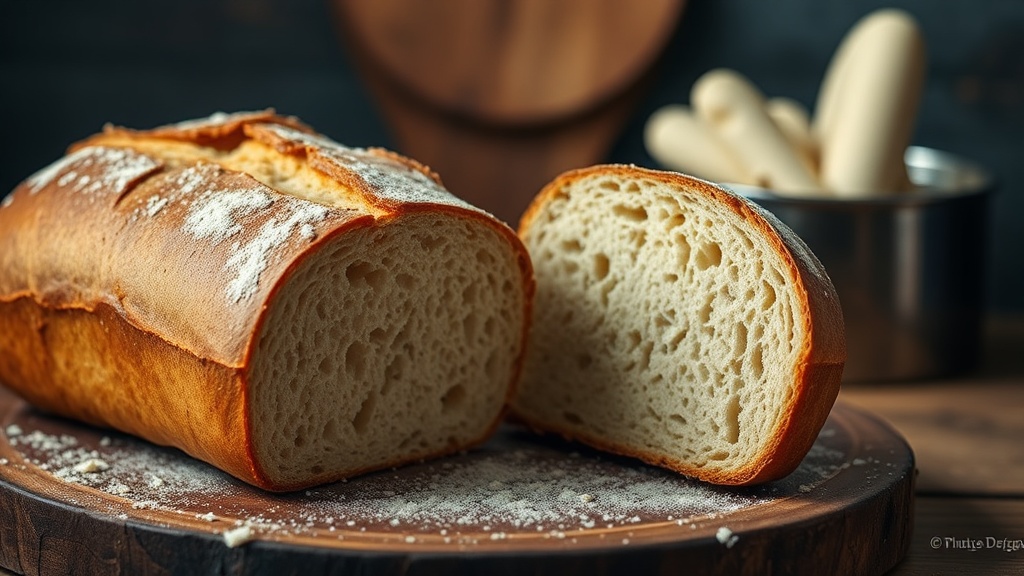
Approximately 75% of gluten-free sourdough starters fail to produce a consistent rise within the first two weeks of cultivation. This failure is rarely due to a lack of patience; rather, it is almost always a technical mismatch between the microbial environment and the specific flour composition used. If your loaf is coming out of the oven looking more like a dense brick than a light, aerated boule, you are likely dealing with one of five specific technical errors: insufficient structural integrity, improper hydration, temperature mismanagement, weak microbial activity, or an imbalance in enzyme activity. This guide breaks down the science of gluten-free fermentation to help you troubleshoot your dough and achieve a reliable oven spring.
The Structural Problem: Lack of Hydrocolloids
In traditional wheat sourdough, gluten provides the elastic network that traps carbon dioxide bubbles produced by wild yeast. In a gluten-free environment, you must create a synthetic version of this network using hydrocolloids. Without a robust structural framework, the gases produced during fermentation will simply leak out of the dough, resulting in a flat, dense loaf.
The most common mistake is relying solely on starches like rice flour or potato starch without adding a binding agent. To achieve a successful rise, your recipe must include a high-quality binder. I recommend using xanthan gum or guar gum, but for a more sophisticated crumb, consider a combination of psyllium husk powder and water. Psyllium husk acts as a structural scaffold, absorbing significant amounts of water to create a gel that mimics the elasticity of gluten.
When using psyllium, ensure you are using the fine powder rather than the whole husks. The fine powder integrates more evenly into the flour blend, preventing "gel clumps" that can disrupt the even distribution of air bubbles. If your dough feels too liquid to hold its shape during the bulk fermentation stage, you have likely under-dosed your hydrocolloids. If you find your dough is struggling with texture in other baked goods, review my guide on why your gluten-free bread is crumbly and dense to understand the ratio of protein to starch required for stability.
The Hydration Paradox
Gluten-free flours have vastly different absorption rates than wheat flour. While a traditional sourdough might require a hydration level of 65-70%, a gluten-free sourdough often requires much higher hydration—sometimes reaching 85% to 100%—to account for the thirstiness of ingredients like sorghum, millet, and buckwheat. If your dough is too dry, the yeast will struggle to move through the medium, and the resulting loaf will be heavy and stunted.
However, there is a fine line between "high hydration" and "soup." If the dough is too wet, it will lack the surface tension necessary to hold its shape during the proofing stage. To test your hydration, use the "windowpane test" adapted for gluten-free: take a small piece of dough and stretch it. It should be able to stretch significantly without tearing immediately, but it should still hold a shape. If it immediately puddles on the counter, you have too much water or not enough psyllium husk to bind it.
Actionable Tip: Always weigh your water and flour in grams using a digital scale. Volume measurements (cups/spoons) are too imprecise for the high-stakes math of sourdough. A difference of even 20 grams of water can be the difference between a successful rise and a collapsed loaf.
Microbial Activity and Starter Strength
A common point of failure is using a starter that is "active" but not "strong." A starter might show bubbles in a jar, but that does not mean it has the gas-producing power required to lift a heavy, starch-heavy loaf. For gluten-free sourdough, your starter needs a consistent food source to maintain a high concentration of lactic acid bacteria (LAB) and wild yeast.
I recommend using a blend of brown rice flour and sorghum flour for your starter. These flours provide a complex nutrient profile that supports a diverse microbial population. Avoid using only white rice flour, as it lacks the micronutrients necessary for long-term starter health. If your starter is sluggish, perform a "feed test": mix 50g of starter with 50g of flour and 50g of water. If it does not at least double in volume within 4 to 6 hours, your starter is not strong enough to leaven a full loaf of bread.
Common Troubleshooting Scenarios:
- The starter smells like acetone: This is a sign of starvation. Your yeast is producing acetic acid because it has run out of sugar. Feed it more frequently or increase the ratio of flour to water.
- The starter is too acidic: If the scent is overly sharp or vinegar-like, the bacteria are outperforming the yeast. This will lead to a loaf that rises poorly and has a sour, unpleasant taste. Increase your feeding frequency to balance the pH.
Temperature Management and Fermentation Timing
Temperature is the most overlooked variable in the sourdough process. Yeast activity is highly sensitive to the ambient temperature of your kitchen. If your kitchen is 68°F (20°C), your fermentation will be significantly slower than if it were 78°F (25°C). In the gluten-free world, where we lack the structural "safety net" of gluten, timing is everything.
If you allow your dough to over-proof, the bacteria will produce too much acid, which can actually break down the hydrocolloid network you've worked so hard to build. This results in a "collapsed" loaf that looks beautiful in the bowl but goes flat the moment it hits the oven. Conversely, under-proofing leads to a dense, gummy interior.
To manage this, use a digital probe thermometer. Aim for a dough temperature of 75°F to 78°F during bulk fermentation. If your house is cold, use a proofing box or a turned-off oven with the light on. If you are using a heavy, protein-rich flour like teff or buckwheat, you may need a slightly longer, slower fermentation at a lower temperature to develop flavor without compromising structure.
The Importance of Oven Spring
Even with a perfect dough, the "oven spring"—the final burst of expansion when the loaf hits the heat—can fail if you haven't prepared the environment. In wheat bread, steam helps keep the crust soft for a longer period, allowing the bread to expand before the crust hardens. In gluten-free baking, steam is even more critical because the crust tends to set very quickly due to the high starch content.
To ensure maximum oven spring, use one of the following methods:
- Dutch Oven Method: This is the gold standard. The heavy lid traps the steam escaping from the dough, creating a high-humidity environment that allows the loaf to expand fully.
- Steam Injection: If baking on a stone or steel, place a cast iron skillet on the bottom rack of the oven and pour boiling water into it immediately after loading the bread.
- The Scoring Technique: Do not skip the score. A deep, decisive slash across the top of the loaf provides a controlled path for the gases to escape. Without a score, the bread will expand in unintended directions, often causing the bottom to crack or the sides to bulge.
When scoring, ensure your blade (a lame or a very sharp razor) is at a 45-degree angle. A shallow score will not allow enough expansion, while a score that is too deep may cause the loaf to deflate. For gluten-free doughs, which are often stickier, lightly dusting the surface with a tiny amount of rice flour before scoring can prevent the blade from dragging and tearing the dough prematurely.
"Precision is the difference between a hobbyist and a baker. In gluten-free sourdough, you cannot rely on 'feel' as much as a wheat baker does; you must rely on ratios, temperatures, and the chemical properties of your binders."
If you have addressed your hydration, strengthened your starter, and mastered your temperature control, you will move from the frustration of dense loaves to the satisfaction of a light, airy, and truly professional gluten-free sourdough.