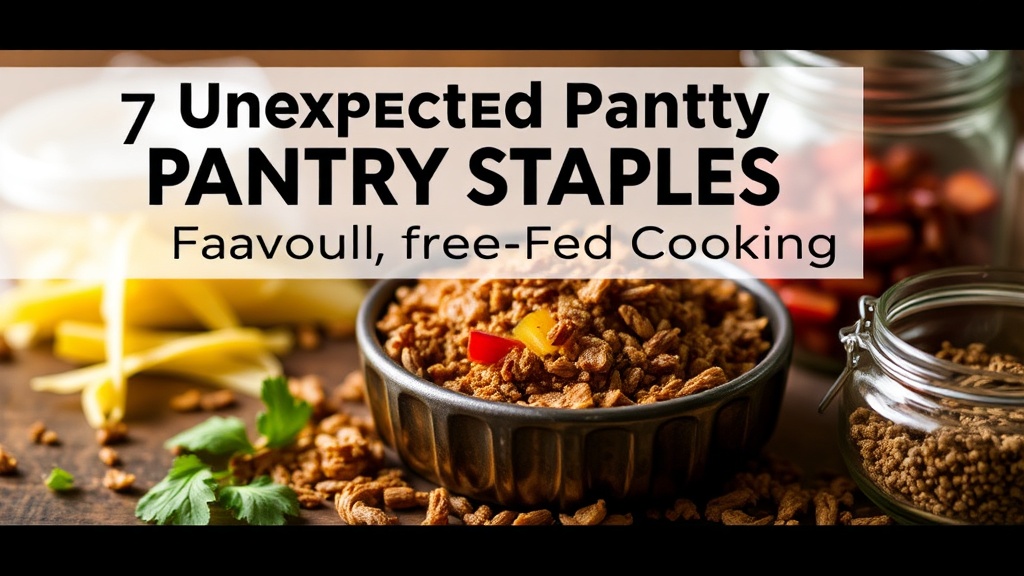
7 Unexpected Pantry Staples for Flavorful Gluten-Free Cooking

Nutritional Yeast for Savory Depth
Tamari for Rich Umami Notes
Apple Cider Vinegar for Brightness
Smoked Paprika for Earthy Warmth
Coconut Aminos for Subtle Sweetness
Miso Paste for Complex Fermentation
Toasted Sesame Oil for Aromatic Finish
Nearly 1 in 100 people worldwide suffer from Celiac disease, yet the vast majority of the general population remains unaware of how much flavor is lost when traditional wheat-based ingredients are removed. This post examines seven specific pantry items that provide the depth, texture, and savory notes often missing in gluten-free diets. We'll look at why these ingredients work from a culinary perspective and how to use them to avoid the bland, grainy textures that plague amateur gluten-free cooking.
Why Does Gluten-Free Food Often Taste Bland?
Gluten-free cooking often lacks the "umami" and structural complexity found in traditional wheat-based recipes. When you strip away wheat, you lose the ability to rely on gluten for texture and a certain savory richness. To fix this, you have to stop trying to mimic wheat and start focusing on high-impact ingredients that provide depth through salt, acid, and fat.
A common mistake is relying too heavily on processed gluten-free flour blends. These blends are often just starches and can leave a dessert or a sauce tasting like cardboard. Instead, look toward whole-food flavor builders. If you're struggling with texture, you might want to check out why your gluten-free baking keeps failing. It's usually a lack of structural integrity, not a lack of flavor.
1. Nutritional Yeast (Nooch)
Nutritional yeast is a deactivated yeast that provides a nutty, cheesy flavor without the dairy or gluten. It's a staple in professional kitchens for adding a savory, "umami" hit to vegan and gluten-free dishes alike. Sprinkle it on popcorn, stir it into a cashew-based cheese sauce, or use it to thicken a soup.
I use it as a seasoning agent when a sauce feels like it's missing "something." It provides a depth that salt alone can't achieve. It’s shelf-stable, cheap, and much more versatile than you might think.
2. Miso Paste (White or Red)
Miso is a fermented soybean paste that acts as a flavor bomb for any savory dish. Because it's fermented, it contains a high level of umami—that deep, savory-sweet profile that makes food craveable. Just be sure to check the label for barley, as some varieties contain gluten.
A spoonful of white miso in a vinaigrette or a red miso in a braised vegetable dish changes the entire profile of the meal. It adds a fermented complexity that mimics the depth of aged cheeses or long-simmered stocks. It's an absolute must-have if you want to move beyond basic salt and pepper.
3. Tamari
Tamari is a Japanese seasoning that is essentially a high-quality, gluten-free version of soy sauce. Unlike standard soy sauce, which is often brewed with wheat, pure tamari is made from soybeans and has a richer, more complex flavor profile. It's darker and more viscous than regular soy sauce, which makes it better for glazing.
If you're used to using soy sauce, switching to a brand like Kikkoman Tamari ensures you aren't accidentally introducing gluten into your kitchen. It provides that essential salty-savory punch that defines many Asian-inspired dishes. It's not just a substitute; it's an upgrade.
4. Tahini
Tahini is a paste made from toasted sesame seeds that offers a creamy, nutty texture and a slightly bitter edge. It's the backbone of many Mediterranean sauces and can be used to add fat and richness to dishes without using dairy. It works beautifully in dressings, as a base for hummus, or as a thickener for sauces.
The fat content in tahini helps carry flavors across the palate. When you're cooking with gluten-free grains like quinoa or buckwheat, a drizzle of tahini provides the necessary mouthfeel that can sometimes be missing. It's a heavy-hitter in the pantry.
| Ingredient | Primary Flavor Profile | Best Culinary Use |
|---|---|---|
| Nutritional Yeast | Nutty/Cheesy | Seasoning, Sauces, Toppings |
| Miso Paste | Salty/Fermented | Soups, Marinades, Glazes |
| Tamari | Deeply Savory | Stir-fries, Marinades, Glazes |
| Tahini | Creamy/Nutty | Dressings, Dips, Smoothies |
5. Coconut Milk (Full Fat)
Full-fat coconut milk provides a way to add luxurious creaminess to a dish without relying on wheat-thickened roux or heavy cream. It's an incredible tool for building a "sauce" that feels substantial. The high fat content ensures the dish doesn't feel thin or watery—a common issue in gluten-free cooking.
Use it in curries, stews, or even in your morning coffee. The key is to use the canned, full-fat version rather than the "light" version found in cartons. The light version won't provide the structural weight you need for a satisfying meal. It's a simple way to add luxury to a basic meal.
6. Smoked Paprika
Smoked paprika is a way to add "fire" and depth without just using heat. Most people reach for chili flakes when they want excitement, but smoked paprika offers a smoky, earthy dimension that builds layers of flavor. It's a way to trick the palate into thinking a dish is more complex than it actually is.
A tiny bit of high-quality smoked paprika can turn a boring roasted potato into a gourmet side dish. It works wonders in dry rubs for meats or as a base for a rich, tomato-based sauce. It’s about adding a sense of "cooked-over-wood" flavor to your pantry staples.
7. Apple Cider Vinegar
Acid is the most underrated element in a kitchen. Apple cider vinegar provides a bright, tangy lift that cuts through heavy fats and brightens up dull flavors. In gluten-free cooking, where many ingredients can feel heavy or "starchy," a splash of acid is vital for balance.
It's a way to wake up a dish that feels one-dimensional. Whether you're making a salad dressing or deglazing a pan, that hit of acid is what makes the flavors pop. It's a cheap, easy way to improve your cooking instantly. (And yes, it's much more interesting than plain white vinegar.)
How Much Does a Flavor-First Pantry Cost?
Building a pantry focused on these ingredients is actually more cost-effective than buying specialized, branded gluten-free replacements. Most of these items—like tahini, miso, and nutritional yeast—are staple ingredients in many global cuisines and are priced competitively in the bulk or international aisles. You're paying for flavor and texture, not just a "gluten-free" label. If you're just starting out, I'd suggest building a reliable gluten-free pantry from scratch with these high-impact items first. It's a better investment than buying a dozen different expensive gluten-free flour blends that you'll only use once.
The goal is to stop thinking about what you *can't* eat and start focusing on what you *can* use to make food taste incredible. A pantry filled with miso, tahini, and smoked paprika is a pantry that can produce professional-grade meals. It's about the science of flavor, not the restriction of a diet.
When you're shopping, look for the ingredients that provide a sensory experience—scent, texture, and depth. That's where the real cooking happens.