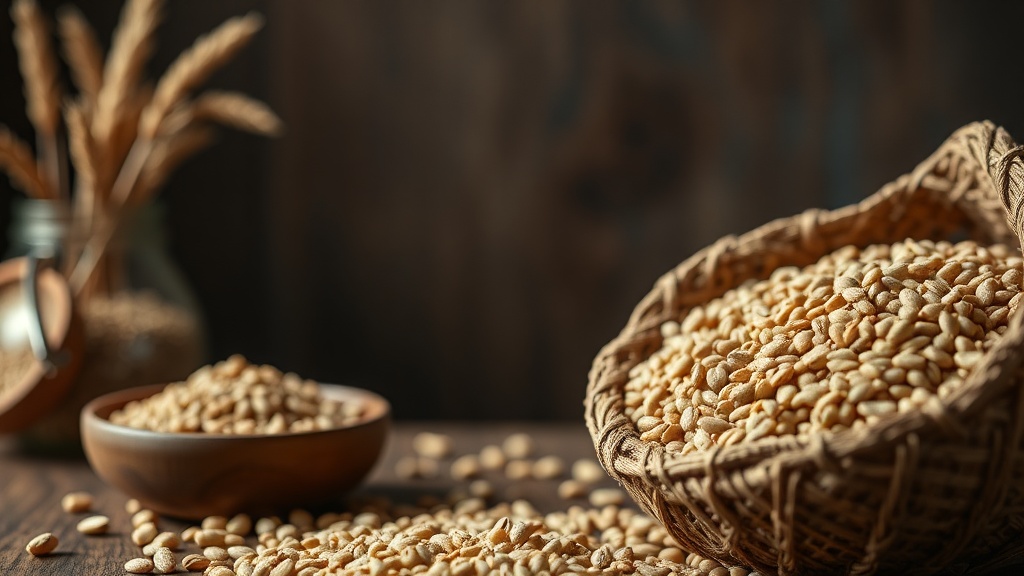
Beyond the Grain with Ancient Grains and Seeds

A single grain of quinoa sits on a dark slate countertop, its tiny, pearlescent surface catching the light like a microscopic gemstone. Beside it, a mound of toasted amaranth looks less like food and more like fine, copper-colored sand. These aren't just fillers for a salad; they are the backbone of a sophisticated, gluten-free pantry. This post explores the structural and nutritional properties of ancient grains and seeds, specifically focusing on how to use them to replace the heavy lifting once done by wheat.
For a long time, the gluten-free world was a wasteland of highly processed rice flour and corn starch. It was bland, heavy, and frankly, uninspired. When I lost access to wheat, I thought my days of textured, complex cooking were over. I was wrong. The real magic happens when you stop trying to mimic wheat and start embracing the distinct personalities of pseudocereals and ancient seeds.
What Are Ancient Grains and Why Use Them?
Ancient grains are cereal crops that have remained largely unchanged by modern hybridization and industrial farming-intensive breeding. While many people call things like quinoa or buckwheat "grains," they are actually pseudocereals, meaning they aren't part of the grass family. This distinction is important for those of us managing Celiac disease or gluten sensitivity, as it ensures a natural absence of gluten-containing proteins.
I use these because they offer a structural integrity that white rice flour simply can't match. If you've ever struggled with a gluten-free loaf that looks like a brick, you're likely missing the varied protein profiles found in these ingredients. A mix of textures—the crunch of millet, the chew of sorghum, the silkiness of amaranth—creates a much more interesting mouthfeel. It’s the difference between eating "food-like substances" and actual, dignified cuisine.
Consider the nutritional density here. Most modern wheat has been bred for yield, but ancient varieties are often bred for resilience. This often results in higher concentrations of minerals and amino acids. You can find more detailed botanical classifications on the Wikipedia page for ancient grains, which helps clarify the distinction between true grains and pseudocereals.
The Heavy Hitters: A Breakdown of Textures
In my kitchen, I categorize these ingredients by how they behave under heat and moisture. You wouldn't treat buckwheat the same way you treat chia seeds. One is a structural foundation; the other is a textural accent.
- Quinoa: The workhorse. It's versatile, protein-rich, and provides a slight nutty bite.
- Buckwheat: Don't let the name fool you—it's unrelated to wheat. It has a deep, earthy flavor that works beautifully in savory porridges.
- Amaranth: Tiny, almost microscopic. It adds a subtle, toasted flavor and can act as a thickening agent in soups.
- Teff: This is the secret weapon. It’s an incredibly fine grain from Ethiopia that produces a texture similar to fine wheat flour.
- Millet: A sturdy, reliable grain that holds its shape well in pilafs.
If you are still struggling with the fundamental physics of gluten-free substitutes, you might want to revisit the ultimate guide to gluten-free flour blends. Understanding the ratio of starches to proteins is where the real science happens.
How Do I Cook Ancient Grains Without Making Them Mushy?
The secret to perfect ancient grains is the ratio of liquid to grain and, more importantly, the resting time. Most people pull the pot off the heat and immediately start spooning the grains out, which is a cardinal sin in a professional kitchen. If you don't let them sit, you'll end up with a pile of sludge instead of distinct, bouncy grains.
I always use a 2:1 ratio of liquid to grain, but I don't just use water. Using a high-quality vegetable or bone broth adds a layer of flavor that water simply lacks. For example, if I'm making a savory buckwheat groat dish, I'll use a mushroom stock. It builds a foundation of flavor that doesn't rely on heavy sauces or salt.
The Professional Method:
- Toast the grain: Before adding liquid, toast your dry grains in a pan with a tiny bit of oil or butter for 3-5 minutes. This brings out the nutty aromatics.
- The Simmer: Add your hot liquid and bring to a boil, then immediately drop to a low simmer.
- The Cover: Keep the lid on tight. Do not peek.
- The Rest: Once the liquid is absorbed, turn off the heat and let the pot sit, covered, for at least 10 minutes. This is where the magic happens.
This technique works for quinoa, millet, and even sorghum. It ensures the center of the grain is cooked through without the exterior turning into a paste. It’s a small step, but it's the difference between a mediocre side dish and a standout component of a meal.
Which Ancient Grains Are Best for Baking?
The best ancient grains for baking depend entirely on whether you are looking for a structural flour or a textural inclusion. You cannot simply swap wheat flour for quinoa flour and expect the same results. Quinoa flour is quite absorbent and can become "gritty" if not balanced correctly with starches.
| Grain/Seed | Best Use in Baking | Flavor Profile | Texture Impact |
|---|---|---|---|
| Teff Flour | Bread & Pancakes | Malty, Nutty | Fine, Smooth |
| Buckwheat Flour | Crepes & Heavy Breads | Strong, Earthy | Dense, Substantial |
| Quinoa Flour | Cookies & Crackers | Mild, Nutty | Slightly Gritty |
| Chia Seeds | Binding Agent | Neutral | Gel-like (when wet) |
When I'm working on a recipe that requires a "heavier" feel—think a hearty breakfast muffin—I'll use a blend of oat flour and buckwheat flour. The buckwheat provides the "weight" that gluten usually provides, while the oat flour keeps it from being overly dense. It's all about the balance of the ingredients. If your dough feels too wet or too dry, you're likely fighting the absorption rates of these unique flours.
For those who are just starting to build their pantry, I've previously written about building a reliable gluten-free pantry. Having these grains on hand is a total game-changer (if I may use that term, though I usually avoid it) for your daily cooking.
One thing to watch out for is cross-contamination. If you are buying these in bulk bins at a grocery store, stop. Immediately. Many of these grains are processed in facilities that handle wheat. Always check the packaging for a certified gluten-free seal. The FDA has very specific guidelines on what can actually be labeled "gluten-free," and I rely on those standards to keep my kitchen safe.
The texture of your food is the first thing people notice. If you serve a grain bowl that is just a mush of boiled quinoa, you've failed the palate. But if you use the toasting method and respect the resting time, you're serving something that feels intentional. You're moving beyond the "substitution" mindset and into the realm of actual cooking. It's a more dignified way to eat, and frankly, it tastes much better.